


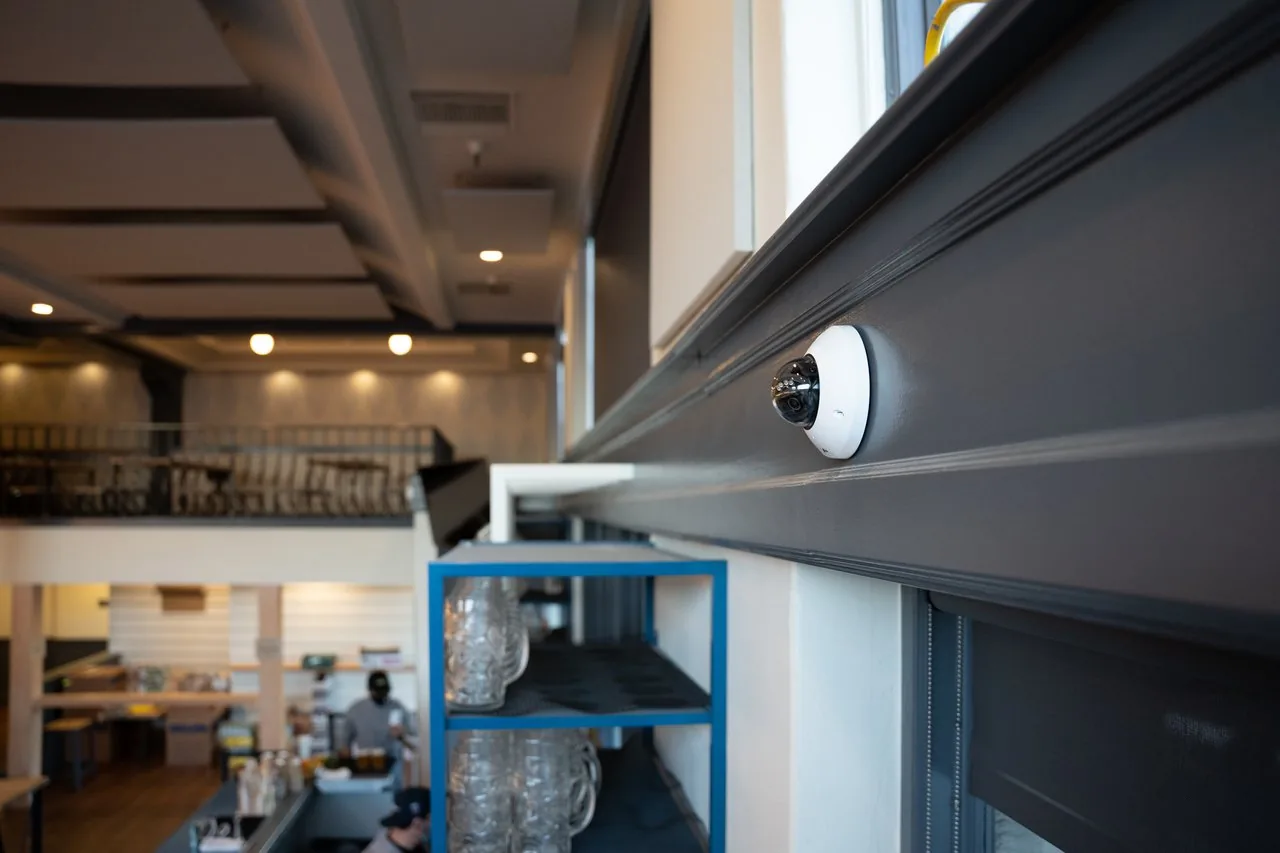
The Dome Security Camera + Gunshot Detection Combo, Explained Without the Sales Pitch
So you're looking at a dome security camera and someone (probably a very enthusiastic salesperson) said the words "gunshot detection" and now you're wondering if these two things actually belong on the same purchase order. Short answer: they can, they often do, and there's a right way and a wrong way to spec it. Long answer: buckle in, because there's more nuance here than a shiny brochure lets on.
We'll cover what a dome camera is actually good at, what a gunshot detection system does (and doesn't) do, what specs to demand on paper, and how the two work together when a real incident kicks off. No fluff. And no invented statistics — every number below is attributed to a named source in the text.
What a Dome Security Camera Actually Is
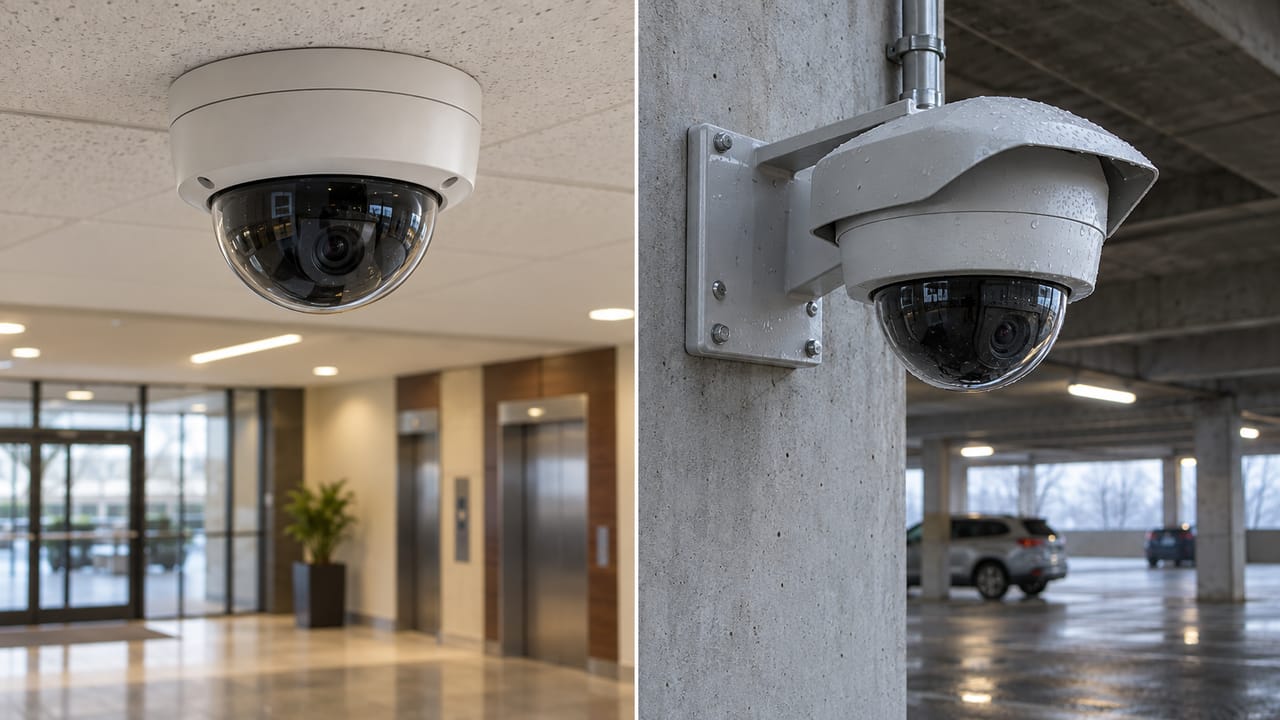
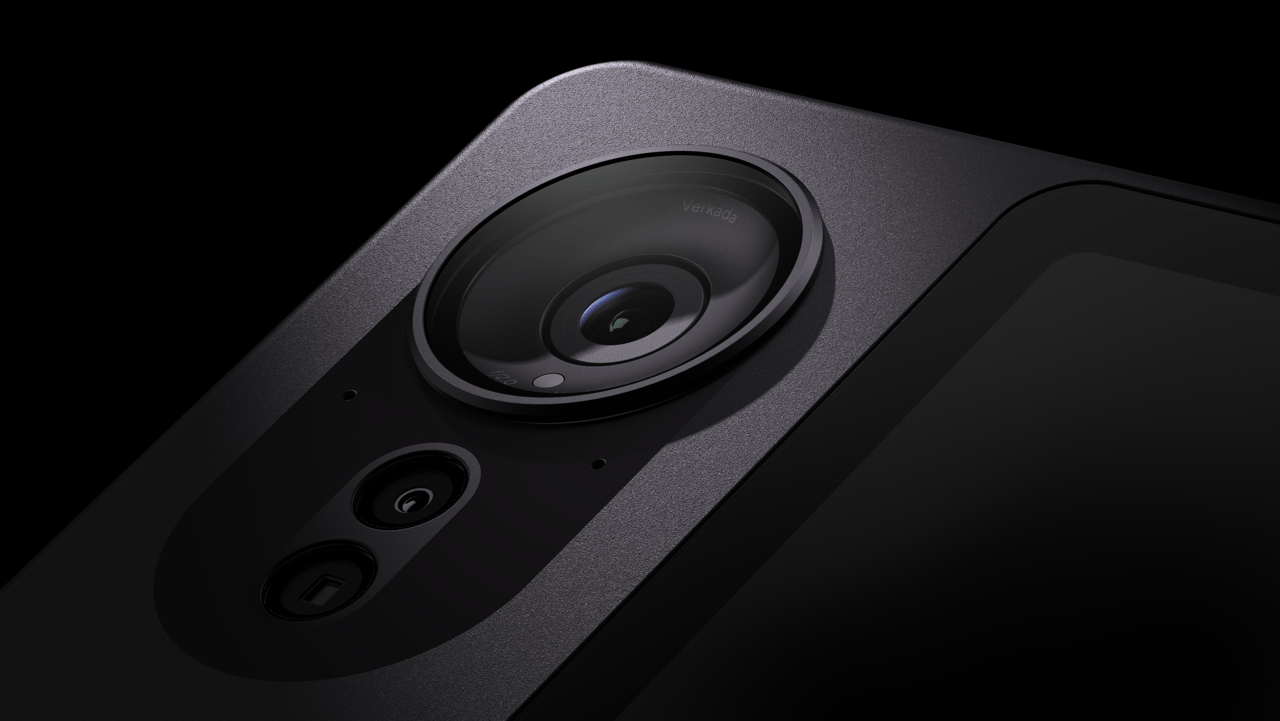
A dome security camera is a fixed or PTZ camera housed inside a transparent dome, wall- or ceiling-mounted, used indoors and outdoors as part of a video surveillance system. That's straight from Senstar's overview, and it's the plainest definition you'll find. The dome itself isn't just for looks — it's the reason these cameras survive in the wild.
Three things make the dome shape genuinely useful:
- It's discreet. People can't always tell which way the lens is pointing, which is helpful in lobbies, retail, and hallways.
- It's vandal-resistant. The curved housing is harder to grab, twist, or smash than a bullet-style camera sticking out of a wall.
- It handles rotation. A PTZ dome can swing to cover a wide field of view without changing form factor.
Senstar's own summary lists variety, discretion, rotation, wide field of view, vandal resistance, indoor/outdoor use, night vision, durability, and wireless options as the main advantages. That's a solid checklist to hold any vendor to.
The Specs That Actually Matter (With Real Numbers)
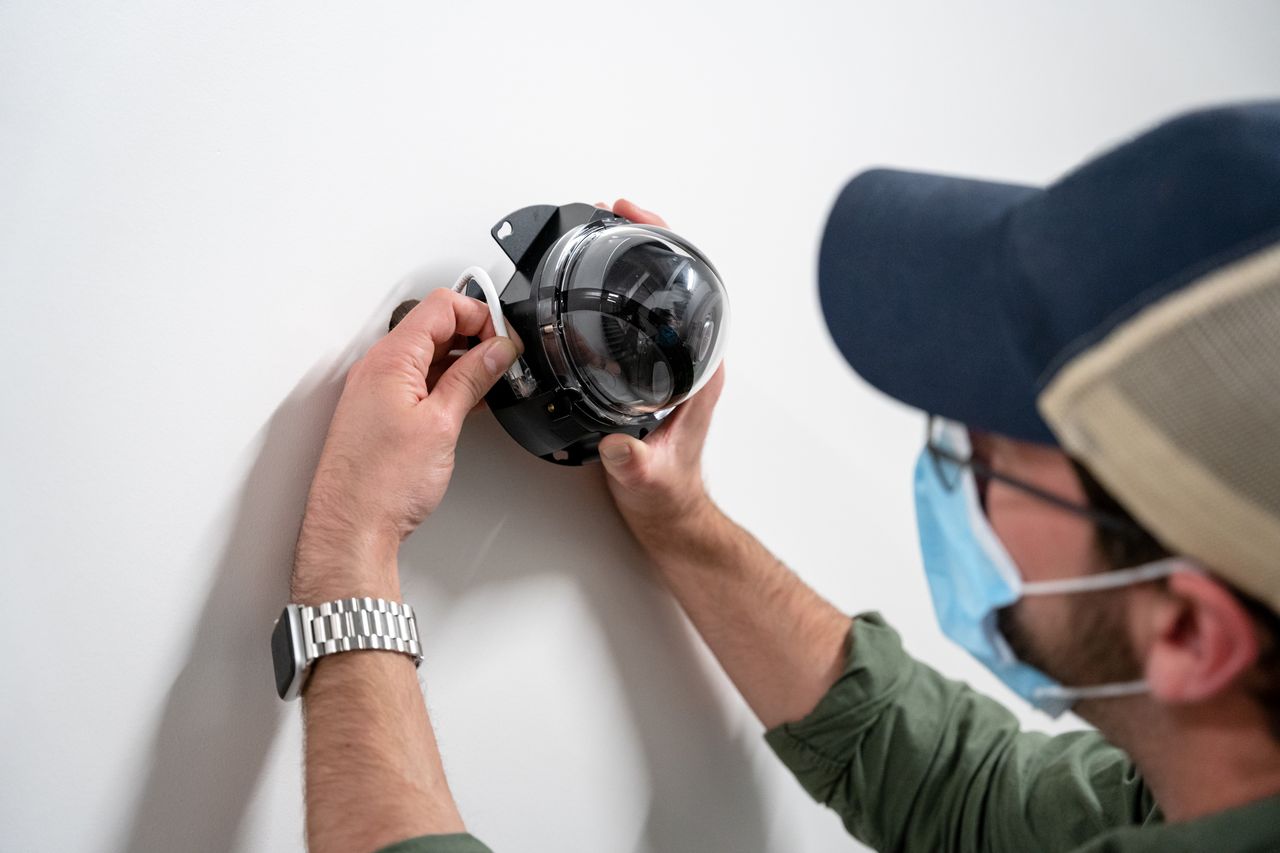
Vendors love to spray marketing terms at you. Here's what a serious spec sheet — like the one Dartmouth's Design & Construction Guidelines uses for its campus video surveillance standard (Section 28 20 00, April 2024) — actually calls out for a dome camera. These are their published minimums, not mine:
| Spec | Dartmouth minimum requirement |
|---|---|
| Image sensor | Progressive scan CCD or CMOS, 0.33" or larger |
| Multi-sensor dome options | 3 or 4 sensors at 3.0, 5.0, or 8.0 MP (180°, 270°, or 360°) |
| Dynamic range | 65 dB minimum (100 dB for wide-dynamic-range models) |
| Frame rate at max resolution | 30 fps |
| Compression | H.265, H.264 (Baseline & Main), Motion JPEG |
| Network / power | 100BaseT Ethernet, PoE per IEEE 802.3-2018 |
| Standards compliance | ONVIF Profile S |
| Indoor enclosure | IK10 impact rated, 14°F to 100°F operating range |
| Outdoor enclosure | IK10 + IP66 (or NEMA 4X), −22°F to 140°F, sunshield |
| Low-light (non-low-light cam, wide lens) | 0.4 lux color / 0.03 lux mono at F1.2 |
| Low-light (low-light cam) | 0.04 lux color / 0.008 fc mono at F1.2 |
| IR-capable cameras | 0.0 lux when IR illuminators are on |
| Optional IR illuminator | 850 nm LED, 100 ft (wide) or 200 ft (telephoto) range |
Source: Dartmouth College, Design & Construction Guidelines, Section 28 20 00 Video Surveillance, April 2024.
Why does this table matter? Because when a vendor hands you a quote, you can hold it up next to this and see if what you're buying is a real commercial-grade dome or a slightly-fancier consumer camera in a plastic bubble. IK10 and IP66 aren't optional for outdoor mounting. Neither is 30 fps at your full resolution — anything less and moving objects (people, vehicles, muzzle flash) start turning into smeared blobs.
The U.S. Department of Homeland Security's CCTV Technology Handbook (SAVER Program, July 2013) makes the same broader point in its housing chapter: sealed, impact-resistant, tamper-resistant, and bullet-resistant housings all exist for a reason, and the choice depends on the threat environment. A dome in a parking garage has different needs than a dome in a corporate lobby.
What a Gunshot Detection System Actually Does
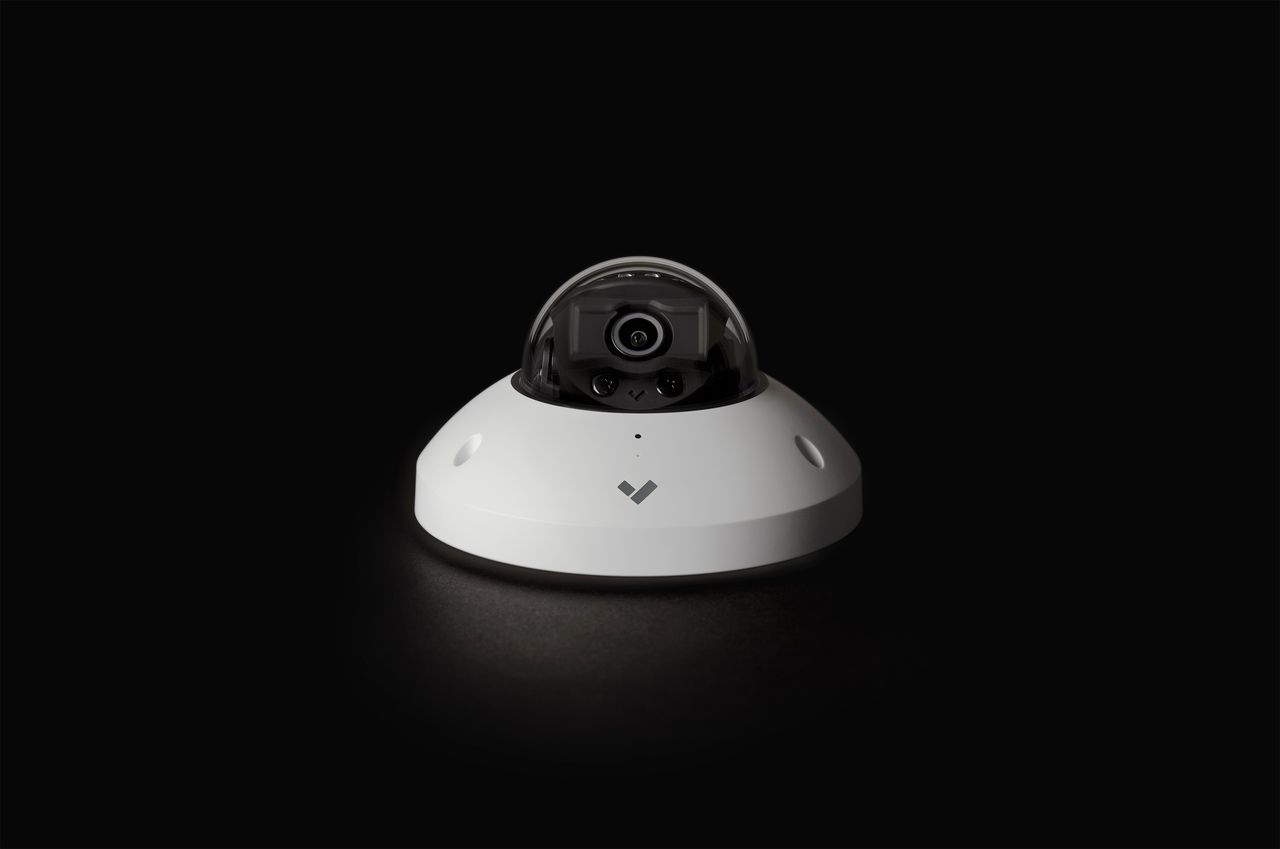
Here's where the honest part gets important. A gunshot detection system uses acoustic sensors — sometimes paired with infrared flash detection — to identify the signature of a firearm discharge, locate roughly where it came from, and push an alert to security staff or first responders. That's the whole job. It hears a bang, decides whether the bang was a gun, and tells someone.
What it does not do:
- It doesn't stop the shot.
- It doesn't identify the shooter by face.
- It doesn't replace a camera. A sensor tells you something happened. A camera tells you what and who.
That last point is why the pairing exists. On its own, an acoustic sensor is a smoke alarm for guns. Paired with cameras, you get situational awareness — the alert triggers cameras in the zone to jump to that location, start recording at higher priority, and hand a live view to whoever is responding.
This article does not quote an adoption number, an average response-time reduction, or a "cities using it" figure. Those numbers get cited online with wildly different sources behind them, and the evidence reviewed here does not establish a specific figure. If a vendor provides one, ask for the underlying study. If they can't produce it, treat it as marketing.
How a Dome Camera and a Gunshot Detection System Work Together
The workflow is where the value shows up. In a properly integrated system:
- The acoustic sensor detects a probable gunshot and estimates the location.
- That alert fires into the video management system (VMS).
- Nearby cameras — usually PTZ domes because they can slew — orient toward the estimated location.
- Video from the moments before and after the event is bookmarked and preserved.
- A live view and the recent recorded clip are pushed to security operators or, in some deployments, directly to law enforcement.
For that whole chain to work, three things have to be true. The cameras need to be on the same network with a VMS that can accept external triggers (Dartmouth's spec calls for ONVIF Profile S and standard protocols like RTP/RTSP for exactly this reason). The camera coverage needs to actually overlap the sensor coverage — pointing a dome at the wrong hallway defeats the point. And someone needs to be watching the alert, or the alert needs to auto-route to someone who is.
This is also where modern AI comes in. Analytics engines can classify objects, track people through a scene, and search recorded footage by appearance after the fact. Dartmouth's spec even requires the analytics engine to distinguish moving foreground objects from background motion (leaves, water, escalators), adapt to lighting changes within about 6 seconds, and self-learn a scene in under 2 minutes. Monarch's AI surveillance platform is built around this kind of intelligence, and we've written a plain-English breakdown of what an AI security system actually is if you want to see how it fits into a real deployment.
Dome vs Other Camera Styles When a Gunshot Detection System Is In Play
If you're specifying cameras to pair with acoustic detection, dome isn't the only option. Here's how the main styles stack up on the dimensions that matter for this use case.
| Camera style | Vandal resistance | Field of view | Discreet? | PTZ available? | Best fit when… |
|---|---|---|---|---|---|
| Fixed dome | High (IK10 typical) | Wide fixed | Yes | Rare | Lobbies, hallways, retail, classrooms |
| PTZ dome | High | Very wide (slews) | Yes | Yes | Large open spaces, parking areas, campus quads |
| Multi-sensor dome (180°/270°/360°) | High | Panoramic | Yes | Panoramic, no slew | Intersections, atriums, plazas — one dome replaces several fixed cams |
| Bullet | Moderate | Narrow-to-wide fixed | No (visible deterrent) | No | Perimeter fences, loading docks |
| Turret | High | Wide fixed | Somewhat | No | IR-heavy night scenes without dome glare |
Notice the multi-sensor dome row. Dartmouth's spec explicitly lists 3- or 4-sensor domes at 3, 5, and 8 MP per sensor across 180°, 270°, and 360° configurations. In an incident scenario, one multi-sensor dome covering a plaza can hand you simultaneous angles instead of forcing a PTZ to choose one direction. That's genuinely useful when seconds matter.
Where This Combo Actually Fits (and Where It Doesn't)
Some environments are natural fits for a dome-plus-acoustic setup: schools, hospitals, transit stations, parking structures, large retail, entertainment venues, and outdoor campuses. Anywhere with lots of people, hard-to-see corners, and a real (even if rare) risk of a firearm incident.
Some environments are not: a small office suite, a single-tenant warehouse with three employees, or a retail space that closes at 6 p.m. The cost and integration overhead of a gunshot detection system rarely pencils out at that scale. A well-placed dome network with strong analytics does more for you.
If you're weighing this decision, we broke down the practical ROI questions in our post on AI security cameras and business benefits. And if you want to talk through your specific site with someone who won't sell you what you don't need, get in touch or browse specific models in our catalog.
One important caveat: any specific requirement for gunshot detection in schools or public buildings depends on your state, district, or local authority. Some jurisdictions have mandates, others have grants, others have neither. Don't take a vendor's word for what's "required" — check with your local emergency management or school safety office directly.
FAQ
Does a dome security camera detect gunshots on its own?
No. A standard dome camera records video and, if it has onboard analytics, can detect motion, tampering, and object patterns. Gunshot detection requires a dedicated acoustic (and sometimes infrared) sensor system, which then integrates with the camera network. The camera's job is to show you the scene — the sensor's job is to identify the sound.
What's the difference between a fixed dome and a PTZ dome for this use case?
A fixed dome covers one field of view all the time — great for hallways or entrances. A PTZ dome can pan, tilt, and zoom on command, which lets it slew toward a triggered alert location. For gunshot detection integration, PTZ or multi-sensor domes are often preferred in open areas because they can respond to the alert, but fixed domes still play a critical role in choke points where you always want the same view.
What ratings should an outdoor dome camera meet?
For outdoor use, Dartmouth's April 2024 campus spec calls for IP66 or NEMA 4X weatherproofing, IK10 impact resistance, an operating range from −22°F to 140°F, and a sunshield where the camera sees direct sun. Those are reasonable baselines to hold any commercial installer to. Anything less and you're gambling on weather and vandalism.
Will a gunshot detection system work with cameras I already own?
Maybe. Integration usually requires the cameras and the video management system to support open standards like ONVIF Profile S and to accept external alert triggers. If your current cameras are older analog units or a closed proprietary system, integration may not be possible without upgrades. A site assessment is the honest way to know for sure.
How much of my facility does one dome camera cover?
That depends on the lens, sensor size, and mounting height — there's no single number. As a rough guide, a single-sensor fixed dome typically covers one room, a corridor, or a defined zone. A 360° multi-sensor dome mounted centrally can cover an entire intersection or atrium. Design should always start with a site walk and a coverage plan, not a catalog page.
Can I skip the acoustic sensors and just use AI analytics on cameras?
Some analytics platforms can flag behaviors that correlate with a firearm incident — people running, crowds dispersing rapidly, weapons visible in frame — but visual detection of a gun in progress is a different problem than acoustic detection of a discharge. The two are complementary, not substitutes. If your priority is fastest possible incident notification, acoustic detection is generally faster because it triggers on the shot itself, not on the reaction to it.