


Warehouse & Manufacturing
Security Systems
Monarch designs, installs, and supports complete warehouse security — cameras, access control, perimeter protection, intercoms, and environmental sensors on one cloud platform — for warehouses, distribution centers, and manufacturing plants.
Last updated: June 2026
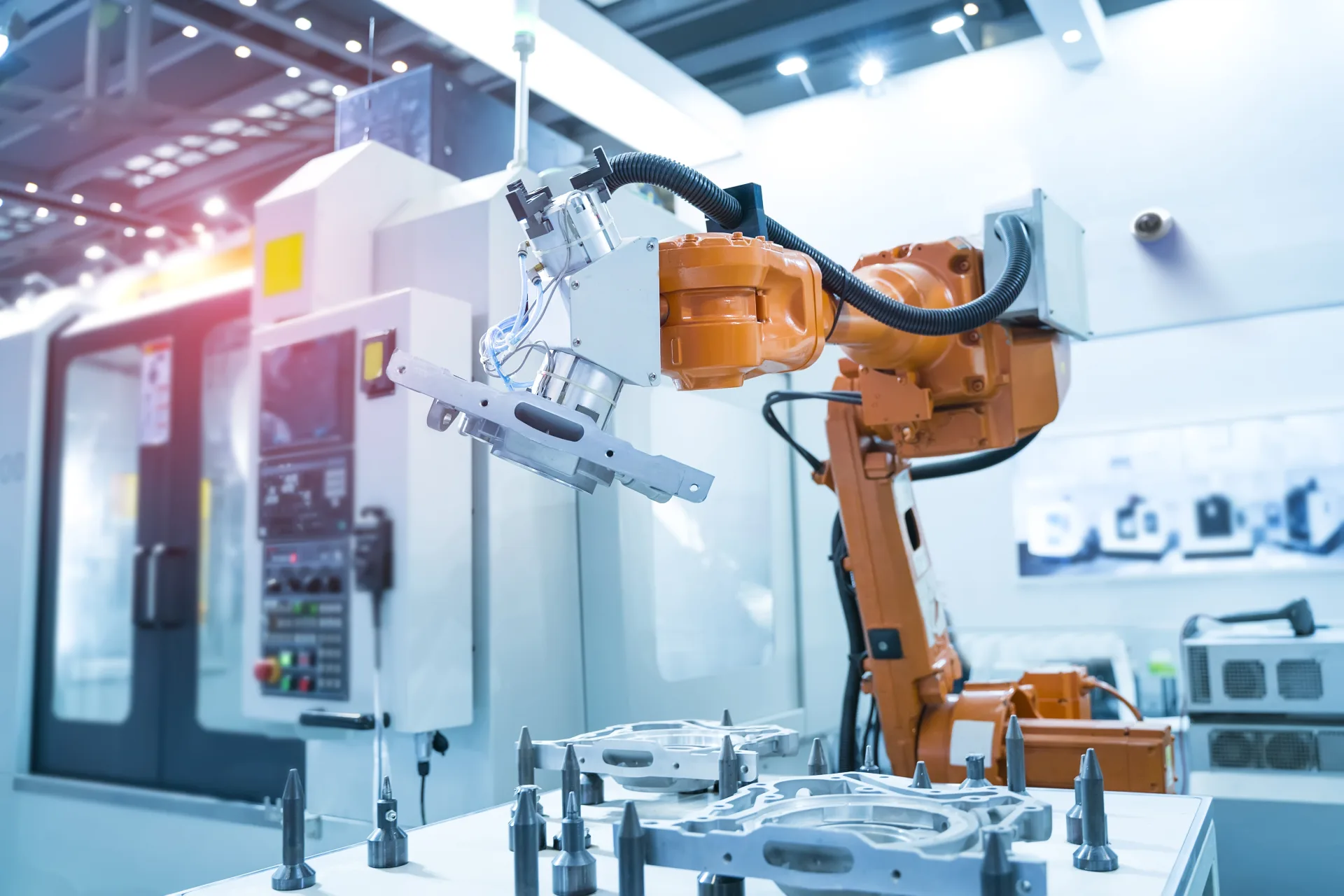
How cloud-managed security works
A short overview of cloud video security — why one integrated platform replaces the old sprawl of cameras, NVRs, servers, and open ports that warehouses and plants have lived with for years. This is the foundation Monarch designs, installs, and supports.
Warehouse Security Systems
A warehouse security system combines cameras, access control, perimeter detection, intercoms, and environmental sensors on one platform to protect inventory, loading docks, and staff across shifts. Monarch designs, installs, and supports that system as a single integrator — so the cameras over the dock, the readers on the doors, and the license-plate cameras at the gate all live in one cloud dashboard with one audit trail, instead of three disconnected products that only an installer can reconcile. For a distribution center moving freight around the clock, that integration is the difference between watching an incident unfold and reconstructing it days later.
Monarch builds warehouse security systems for the full range of industrial facilities — single-site warehouses, multi-building distribution and fulfillment networks, 3PL and logistics operations, cold storage, food processing, and manufacturing plants — and ties every site into the same dashboard. Add the next building and it's a license, not a new project. You can explore the underlying commercial security camera systems and platform on our homepage.
What is a warehouse security system? A warehouse security system is an integrated set of physical-security layers — surveillance cameras, access control, perimeter and yard protection, intercoms, and environmental sensors — managed from one cloud platform to deter theft, document incidents, and keep workers safe across every shift and entrance.
Cameras, access control, perimeter, and sensors on one platform
One platform means every security layer shares a single dashboard, a single login, and a single timeline. Cameras store footage encrypted on the device and stream to the cloud — no NVR in a closet, no server for IT to patch — while access control, perimeter sensors, intercoms, and environmental monitors report into the same interface. When a dock door is forced after hours, the nearest cameras snap onto the screen and the event is already cued; when a credential is revoked, it's gone from every door in every building in seconds. AI search finds a person, a vehicle, or a forklift across the entire camera estate in seconds, so reviewing a shift takes minutes instead of hours.
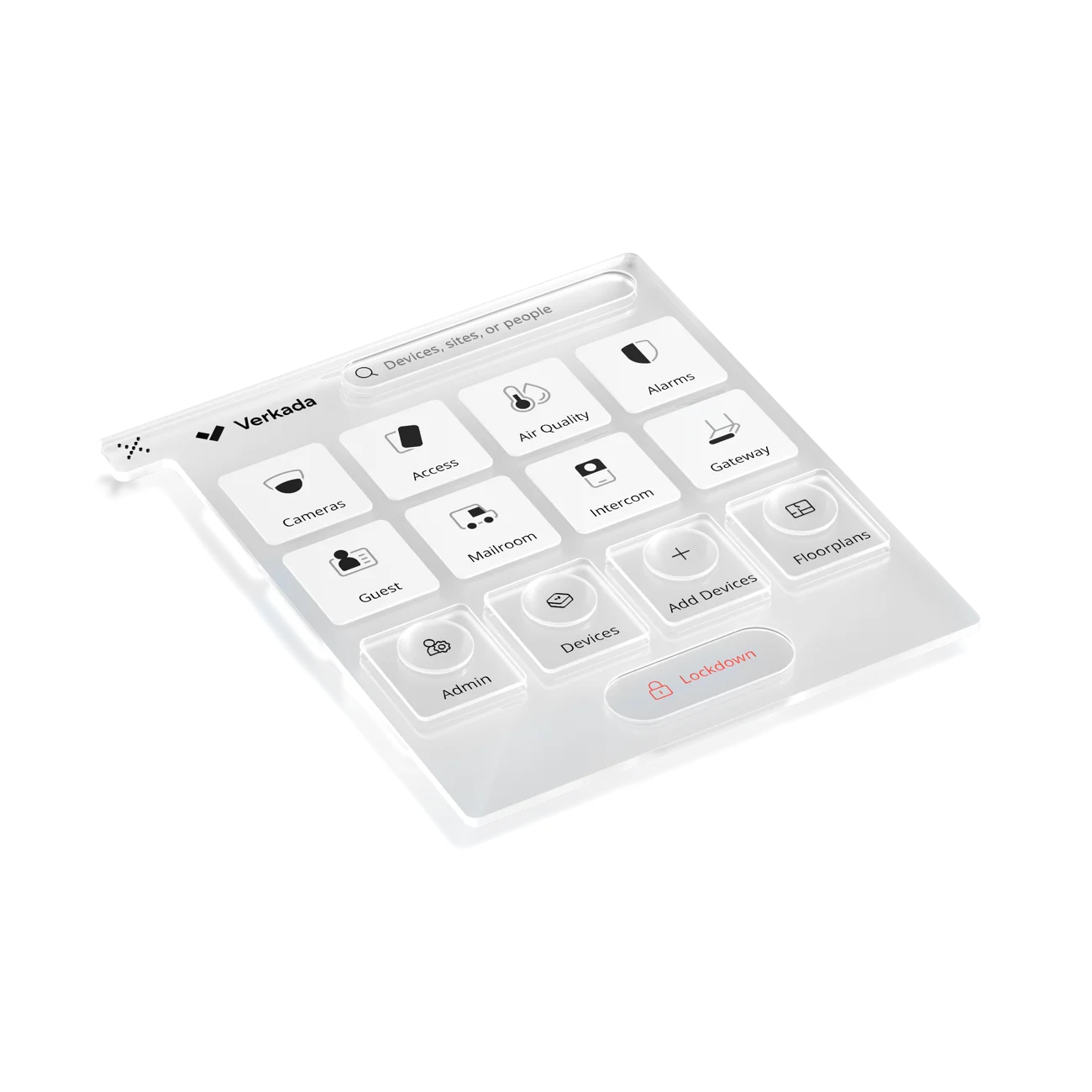 One dashboard · every camera, door & sensor
Five systems behave like one
Most warehouses accumulate security in layers nobody planned — a DVR from one decade, badge readers from another, an alarm panel no one remembers programming. Monarch replaces the pile with a single platform where every device talks to every other device.
- One login for cameras, doors, perimeter, intercoms, and sensors — across every building.
- Events link automatically — an alarm, a badge, and the video of it land on one timeline.
- Scales by license — the second and tenth site join the same dashboard with no new servers.
What makes a warehouse different — docks, high racking, yard, shift turnover
A warehouse is harder to secure than an office because the threats live where the work happens: at the loading dock, in the racking, out in the yard, and at shift change. Dock doors are the busiest and most exposed openings in the building; high racking creates blind aisles a single dome can't cover; the trailer yard is effectively an outdoor parking lot full of high-value freight; and round-the-clock shift turnover means a constant churn of people and credentials. Monarch designs warehouse security systems around each of these realities specifically — camera placement that sees down every aisle, dock coverage tied to receiving, yard cameras with license-plate capture, and access schedules that match real shift patterns — rather than dropping office-grade cameras into an industrial space and hoping.
 Dome · vandal-resistant, aisle & floor coverage
Coverage that fits the building
- Loading docks — a camera per door, tied to receiving, so every trailer's visit is on record.
- High racking & blind aisles — placement and multisensors that see down rows, not just over them.
- Trailer yard — weatherized cameras and license-plate capture where freight sits unattended.
- Shift turnover — access schedules and audit trails built around 24/7 crews, not 9-to-5.
Industrial Security Solutions
Industrial security solutions are the physical-security systems that protect manufacturing plants, warehouses, and industrial facilities: surveillance cameras, access control, perimeter and yard protection, intercoms, and environmental sensors, integrated on one platform. To be precise, this page is about industrial security in the physical sense — protecting the building, the people, and the product — not OT/ICS cybersecurity. Monarch is an industrial security integrator: we assess the facility, design the system, install and commission it, and support it for its lifetime, so a single accountable partner owns the result instead of a stack of disconnected vendors.
Industrial security, defined. Industrial security is the protection of manufacturing and warehouse facilities — their perimeters, entrances, production areas, and stored goods — using integrated physical-security technology: cameras, access control, perimeter detection, intercoms, and sensors, deployed and maintained by a security integrator.
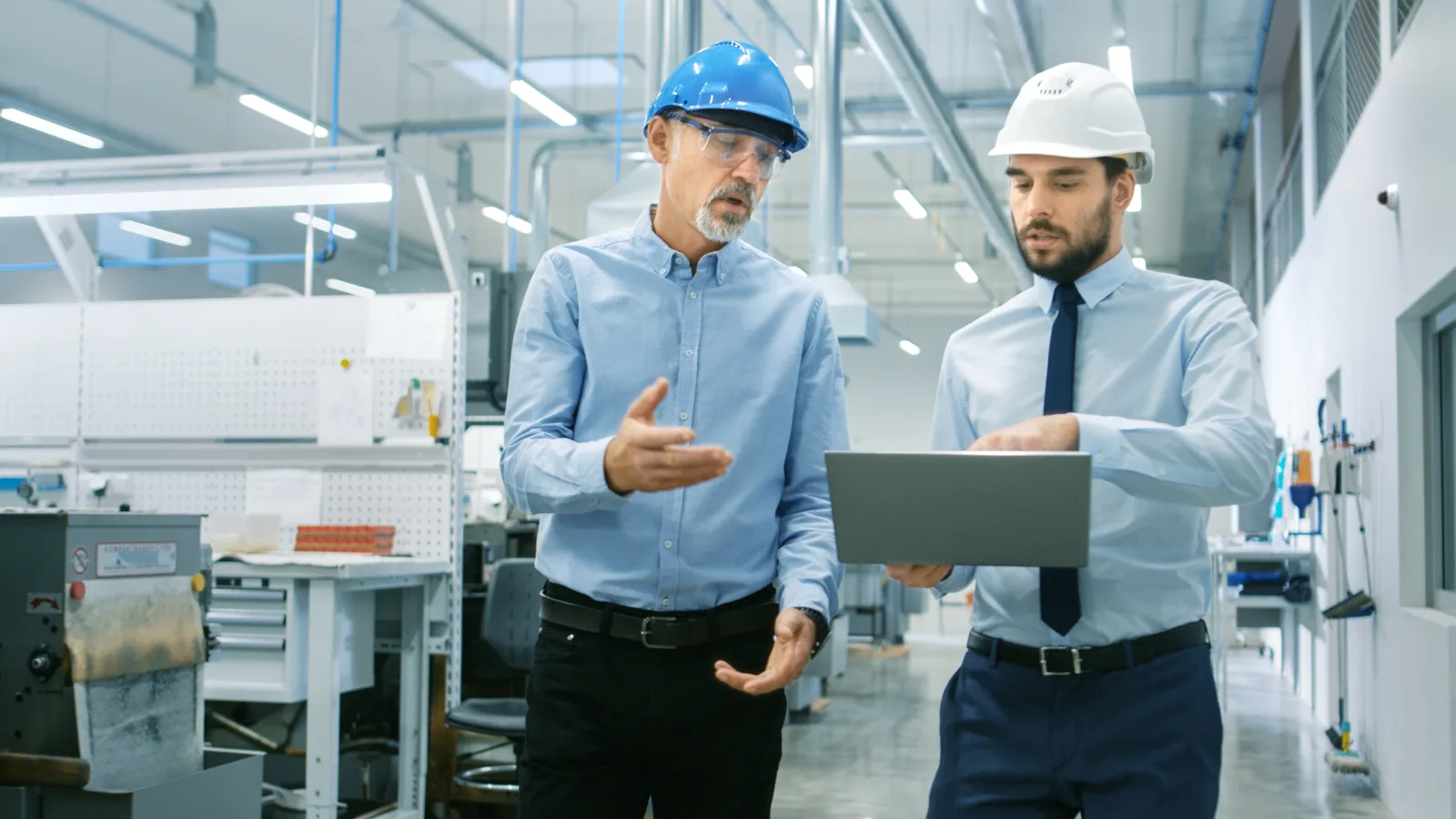 A real site walk · design before quote
An integrator who walks the floor
The ranking results for industrial security are a wall of product catalogs and guard-service brochures — none of which will visit your plant, design around your process flow, or stand behind the install. Industrial security integrators start on the floor instead — Monarch walks the docks, the yard, the production lines, and the restricted areas with your operations team before a single device is specified.
- Assess — a documented walk of every entrance, line, and storage zone.
- Design — a camera-by-camera, door-by-door plan your team can read.
- Install & support — licensed installation, commissioning, training, one number to call.
Why operators choose an industrial security integrator over a box vendor or a guard service
Operators choose an industrial security integrator because industrial security integrators own the whole outcome — design, installation, integration, and support — while box vendors sell hardware and guard services sell hours. The three options solve different problems, and the comparison below is the one plant managers actually weigh. The integrated platform is the wedge: instead of cameras from one vendor, doors from another, and patrols from a third, one partner ties every layer together and answers for it.
Integrator vs. box vendor vs. guard service
What each one actually covers| Comparison aspect | Online / box vendor | Guard service | Monarch (integrator) |
|---|---|---|---|
| What you get | Online / box vendorHardware in a carton | Guard servicePeople on site, by the hour | Monarch (integrator)A designed, installed, supported system |
| Who designs it | Online / box vendorYou do | Guard serviceNo system design | Monarch (integrator)Monarch, from a site walk |
| Coverage | Online / box vendorCameras only | Guard serviceWherever a guard is standing | Monarch (integrator)Cameras, access, perimeter, intercoms, sensors |
| One platform | Online / box vendorNo — point products | Guard serviceNo | Monarch (integrator)Yes — one cloud dashboard |
| Ongoing cost | Online / box vendorLow up front, you maintain it | Guard serviceHigh, recurring, scales with hours | Monarch (integrator)Hardware + licensing; covers 24/7 without added headcount |
| Accountability | Online / box vendorNone after the sale | Guard serviceStaffing company | Monarch (integrator)One partner, for the life of the system |
Many operators pair a lean on-site guard presence with an integrated platform, so a small team can see and respond across the entire facility — the platform multiplies the people, rather than replacing judgment.
Loading Dock & Cargo Theft Prevention
You prevent cargo theft by making the dock and the yard accountable: a camera on every dock door tied to the receiving workflow, license-plate recognition at each gate, access control that logs who opened which door and when, and AI camera search that reviews a trailer's entire visit in seconds. The loading dock is the single highest-risk point in any warehouse — it's where the building opens to the outside, where freight changes hands, and where most loss originates — so it earns the densest coverage on the site. Cargo theft has risen sharply in recent years, a trend documented by industry trackers like CargoNet and the National Insurance Crime Bureau, which makes dock and yard coverage the first place a security budget should go.
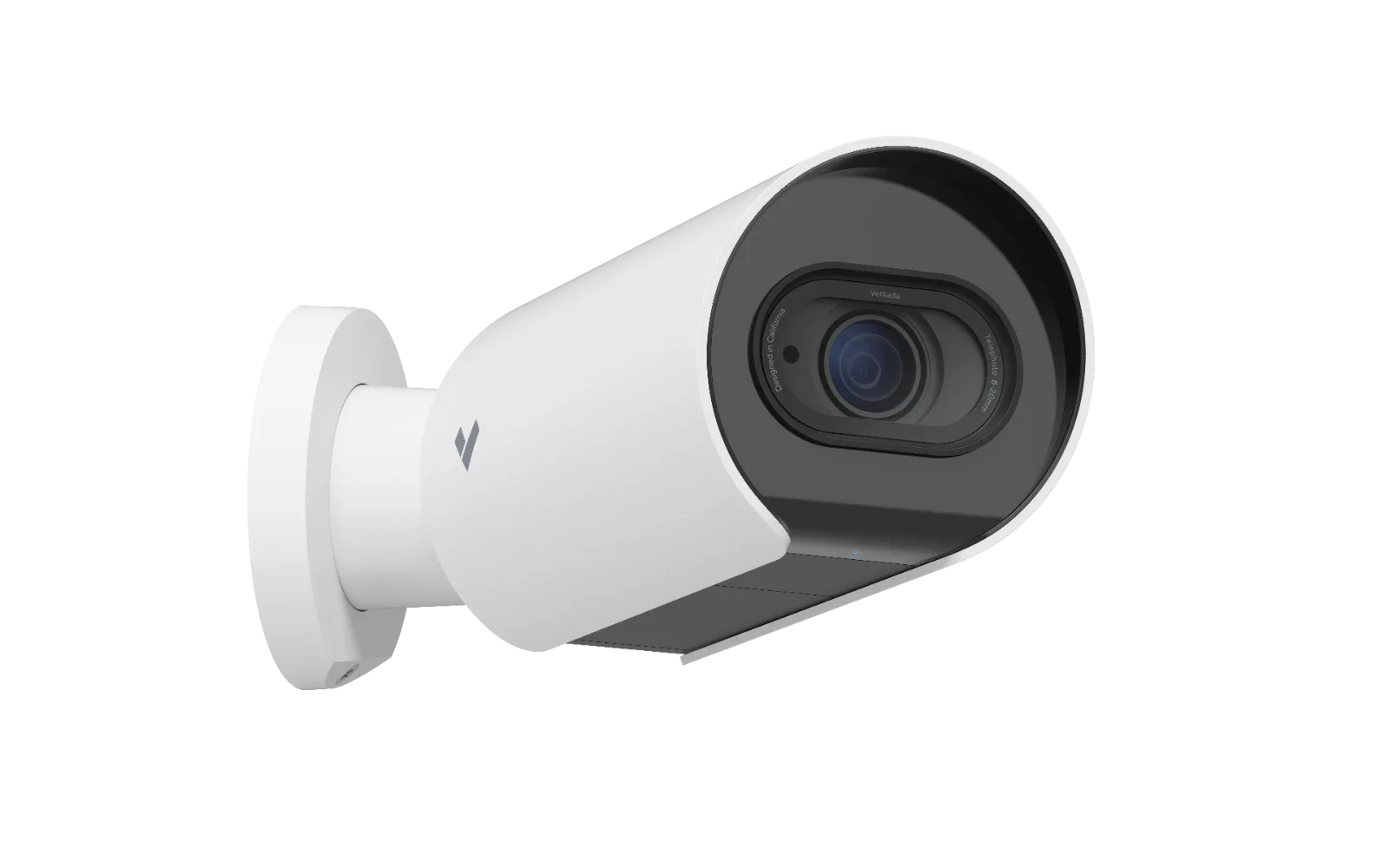 Telephoto bullet · dock doors & plate capture
Every door, every plate, on record
Dock-door cameras paired with license-plate recognition turn the busiest opening in the building into the best-documented one. Every trailer that backs in, every plate that enters the yard, and every door cycle is captured and searchable — so a discrepancy on a BOL or a chargeback dispute resolves with footage, not a guess.
- Camera per dock door — tied to receiving, so the trailer and the paperwork match on video.
- License-plate recognition — every vehicle in and out of the yard logged with a timestamp.
- AI search — review a whole trailer visit, or find a vehicle across cameras, in seconds.
Cargo theft prevention without slowing throughput
The hard part of cargo theft prevention is doing it without slowing the dock down — throughput is the business, and security that adds friction gets switched off. Monarch designs for the opposite: passive license-plate capture that needs no gate stop, dock cameras that record automatically without anyone clicking, mobile credentials that open the right door without a key search, and alerts that only fire on genuine exceptions — a door held open too long, a trailer in an unassigned bay, motion in the yard after hours. The system watches everything so the team can keep moving freight, and only interrupts them when something is actually wrong. Read how we approach AI security cameras across the platform.
Access Control for Warehouses & Plants
Access control for a warehouse or plant manages who can open which door, gate, or dock — and records every event — from one cloud dashboard. Industrial access control replaces brass keys and standalone panels with badges and mobile credentials, so a departed employee or contractor loses access everywhere in seconds, not after a locksmith visit. The same system handles the doors office buildings never have: roll-up dock doors, vehicle gates, hazmat and tool cribs, server and electrical rooms, and the line between the warehouse floor and the office.
Gates, docks, and restricted areas
Industrial access control extends past personnel doors to the openings that define an industrial site: vehicle gates at the property line, roll-up dock doors, and the restricted interior rooms that hold the most risk. Industrial security gates get credentialed vehicle access and a camera that reads plates; dock doors get position sensors and held-open alerts; and restricted areas — tool cribs, hazmat storage, MDF/IDF closets, finished-goods cages — get named-person access lists, schedules, and a camera at the threshold. Every cycle is logged, so the audit trail protects the people who badge through legitimately and flags the ones who don't. For the fundamentals behind these choices, see our guide to door access control systems.
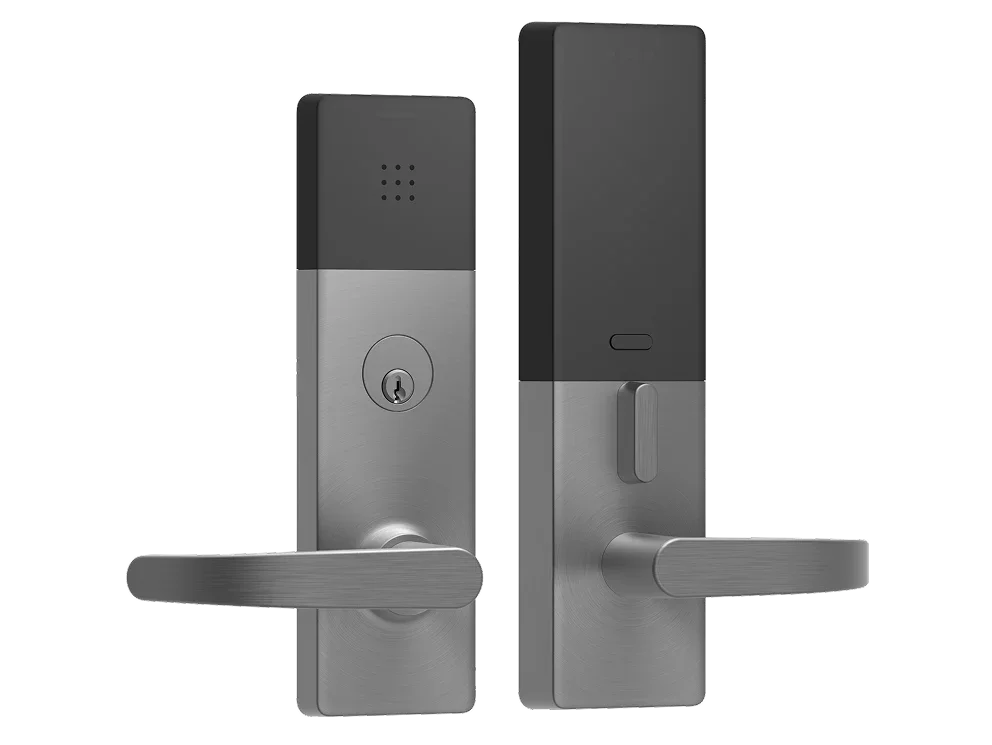 Badge + mobile credential · audit-logged entry
Restricted areas, gates, and the floor-to-office line
Some doors need stricter rules than the building around them — and produce the record that ends disputes. Each gets a credential, a schedule, and a log, managed from the same dashboard as the cameras watching it.
- Vehicle gates — credentialed entry with plate capture at the property line.
- Dock doors — position sensors, held-open alerts, and video paired to each cycle.
- Tool cribs & hazmat — named access lists where chain of custody and safety demand it.
- One-click lockdown — isolate a zone or the whole site from a phone in an emergency.
Industrial Intercoms & Staff Duress
Industrial intercom systems let staff see and verify a driver or visitor before releasing a gate or dock door, while staff duress devices summon help silently from anywhere on the floor. Both run on the same platform as the cameras and doors, so a press doesn't just send an alert — it pulls up the nearest cameras and can lock or release the right doors in the same second. In a large plant or warehouse where the nearest supervisor may be a building away, that integration turns a button into a coordinated response.
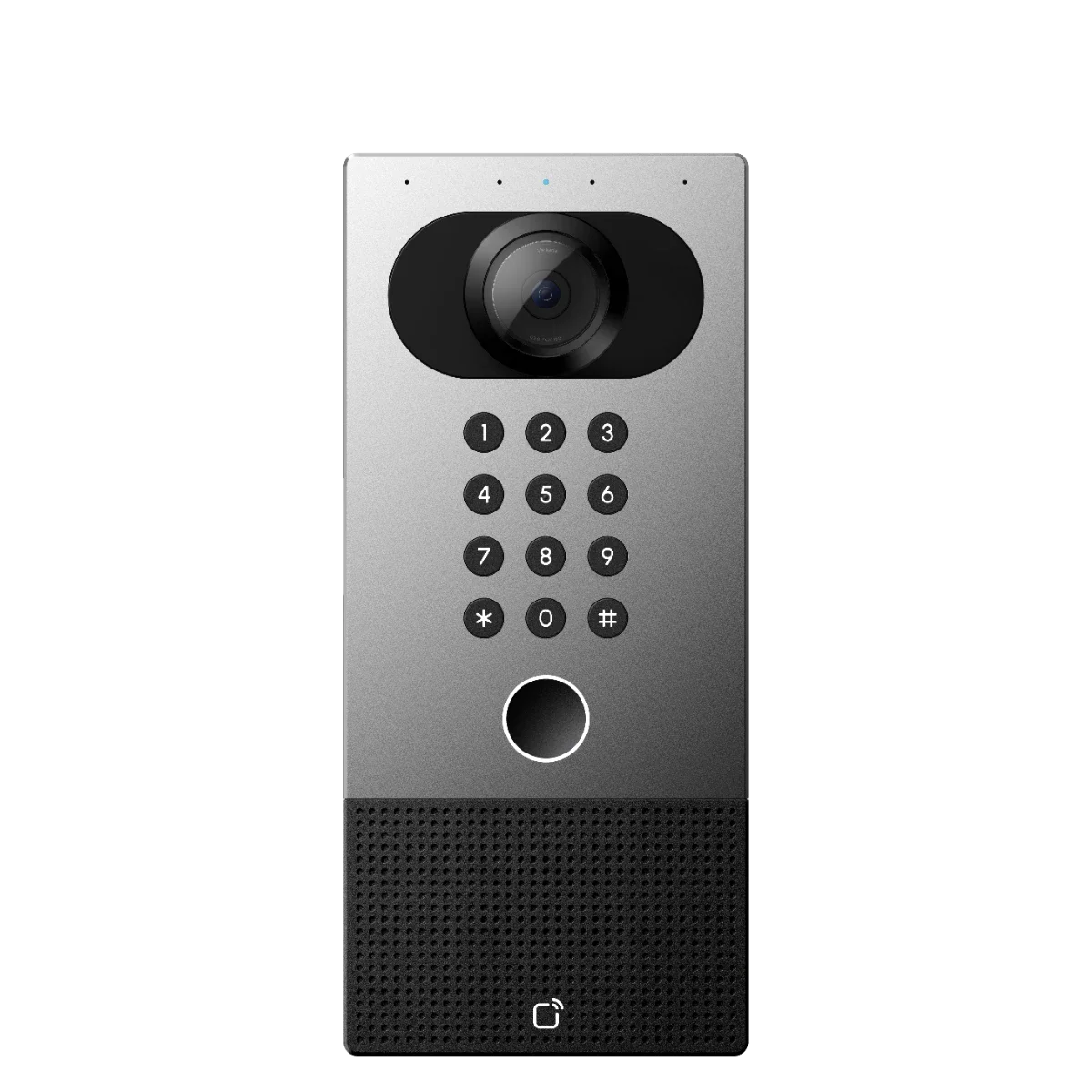 Video intercom · verify, then release
Every judgment-call entrance
- Driver check-in — verify a carrier at the gate before the trailer ever reaches the yard.
- After-hours doors — release remotely from a desk or phone instead of posting staff.
- Loading docks — vendor and delivery verification tied to the dock camera.
- Horn speakers — live or recorded announcements across the floor and yard from the same dashboard.
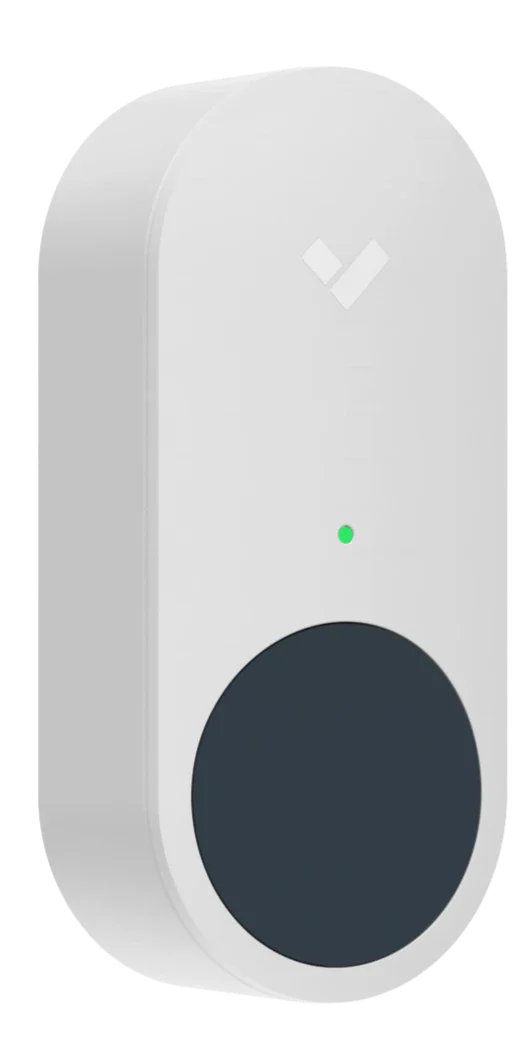 Duress button · silent, wireless, one press
Help, located to the spot
Shipping offices, receiving counters, lone night-shift workers, and remote yard posts all absorb real risk. A fixed duress button or a wearable on a badge reel summons help silently, with the worker's name and exact location — critical in a facility where a shout won't carry over machinery.
- Cameras snap to the scene — the responder sees live video and the moments before the press.
- Doors react by rule — pre-programmed lockdown or release fires automatically.
- One documented timeline — button, video, doors, and acknowledgment in a single record.
For the deep dive on duress program design, see our staff-safety guide for healthcare — the same architecture protects industrial workers.
Perimeter & Yard Security
Perimeter and yard security protects the fence line, gates, and trailer yard — the open ground where intrusions start and where freight sits unattended after hours. Industrial surveillance at the perimeter combines long-range cameras, license-plate recognition at every gate, and after-hours analytics that tell the difference between a raccoon and a person climbing a fence, so the alert that wakes someone at 2 a.m. is real. For sites with no conduit at the back of the lot, pole-mounted, solar, and trailer-based cameras cover the yard without trenching power across the property.
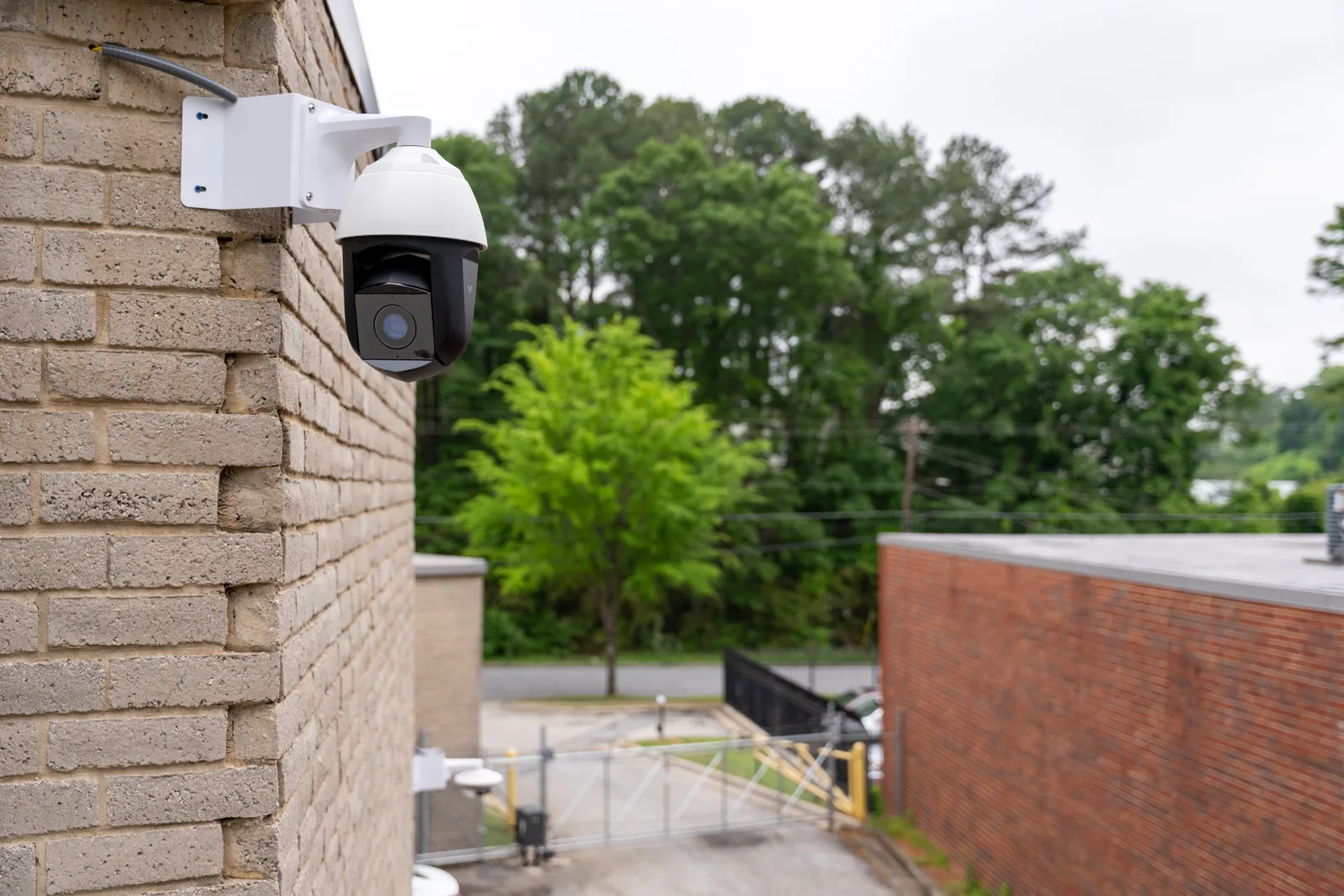 PTZ · operator-steered yard & fence-line coverage
See the yard before the building
The trailer yard is an outdoor warehouse full of high-value freight, and the perimeter is where a determined intruder is easiest to stop — and cheapest. Long-range cameras and analytics watch the fence line so a breach is caught at the edge, not discovered at the dock.
- Fence-line cameras — long-range coverage with person- and vehicle-aware alerts.
- Gate LPR — every plate entering or leaving the yard, logged and searchable.
- Trailer yard — coverage of staged freight, with alerts on unassigned-bay movement.
- No-conduit options — pole, solar, and trailer-mounted cameras for the far corners.
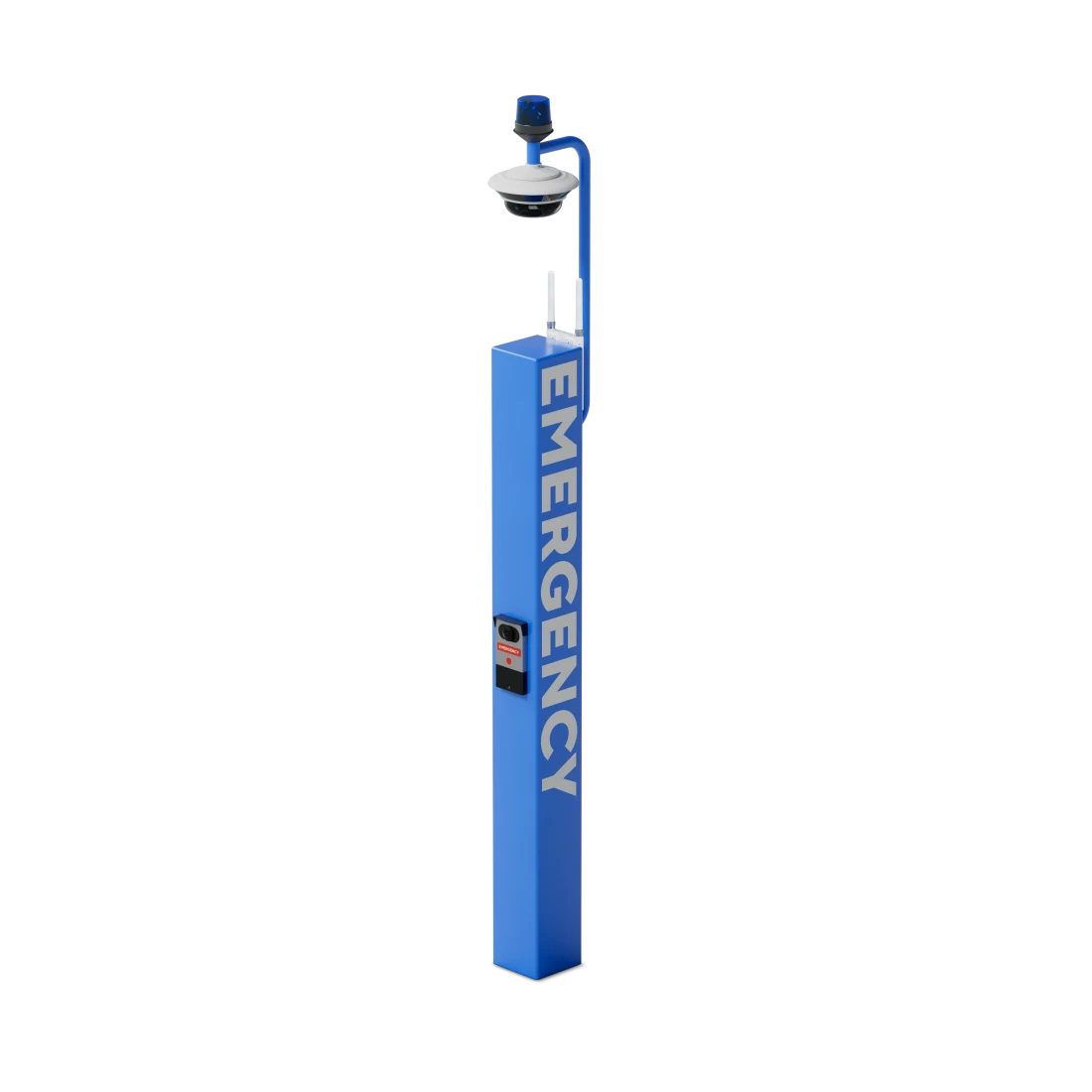 Blue-light tower · camera, intercom & deterrence
A visible point of help in the lot
Large employee lots, fuel yards, and remote trailer areas leave workers exposed walking to and from shift. An emergency call tower combines a one-press intercom, a camera, and a deterrent beacon and speaker into a single landmark — a fixed, visible place to get help that doubles as a powerful deterrent.
- One-press call — connects to your team or a monitoring center with video already up.
- Deterrent beacon & speaker — a visible warning, and a voice that can talk down an intruder live.
- Same platform — the tower's camera and intercom live in the same dashboard as the rest.
Warehouse Paging System
A warehouse paging system has to reach the far end of a noisy aisle, the dock and the yard. Verkada Sound Systems does it with PoE network speakers inside and weather-rated speakers outside, all managed in Verkada Command. If the building already has overhead speakers, a network audio player connects to the existing amplifier and brings them under cloud control without rewiring.
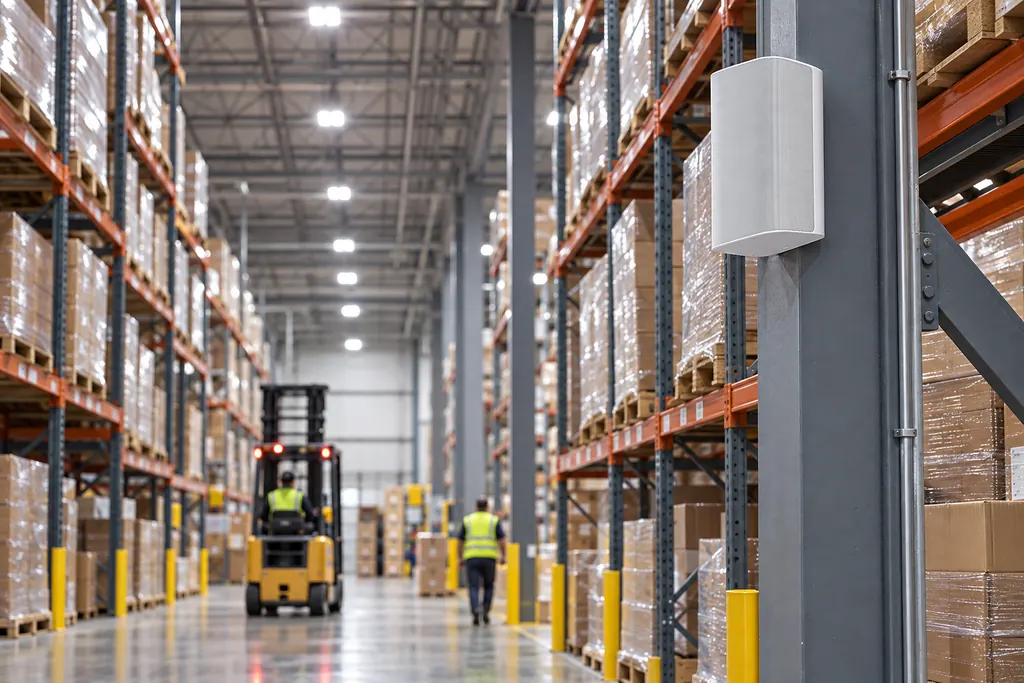
An outdoor paging system that doubles as deterrence
- Zones: page one aisle, the docks or the whole building, at one site or every site.
- Clear announcements: live from a microphone or typed as text-to-speech, with live translation for multilingual crews.
- After hours: when a camera detects activity in the yard, a nearby speaker can play a warning automatically.
Speakers, audio players and prices are on our Verkada Sound Systems page.
Cold Storage & Food-Processing Facility Security
Cold storage and food-processing security combines physical protection with environmental monitoring: the same platform that runs cameras and access control also watches temperature, humidity, and door-open events in every cooler and freezer. For a cold-storage or food facility, a security incident and a cold-chain failure threaten the same thing — the product — so Monarch monitors both on one dashboard. A freezer door left open triggers the same kind of alert as a forced perimeter gate, and the camera covering that door is one click away, so a temperature excursion becomes a documented event with video, not a ruined pallet discovered on the next round.
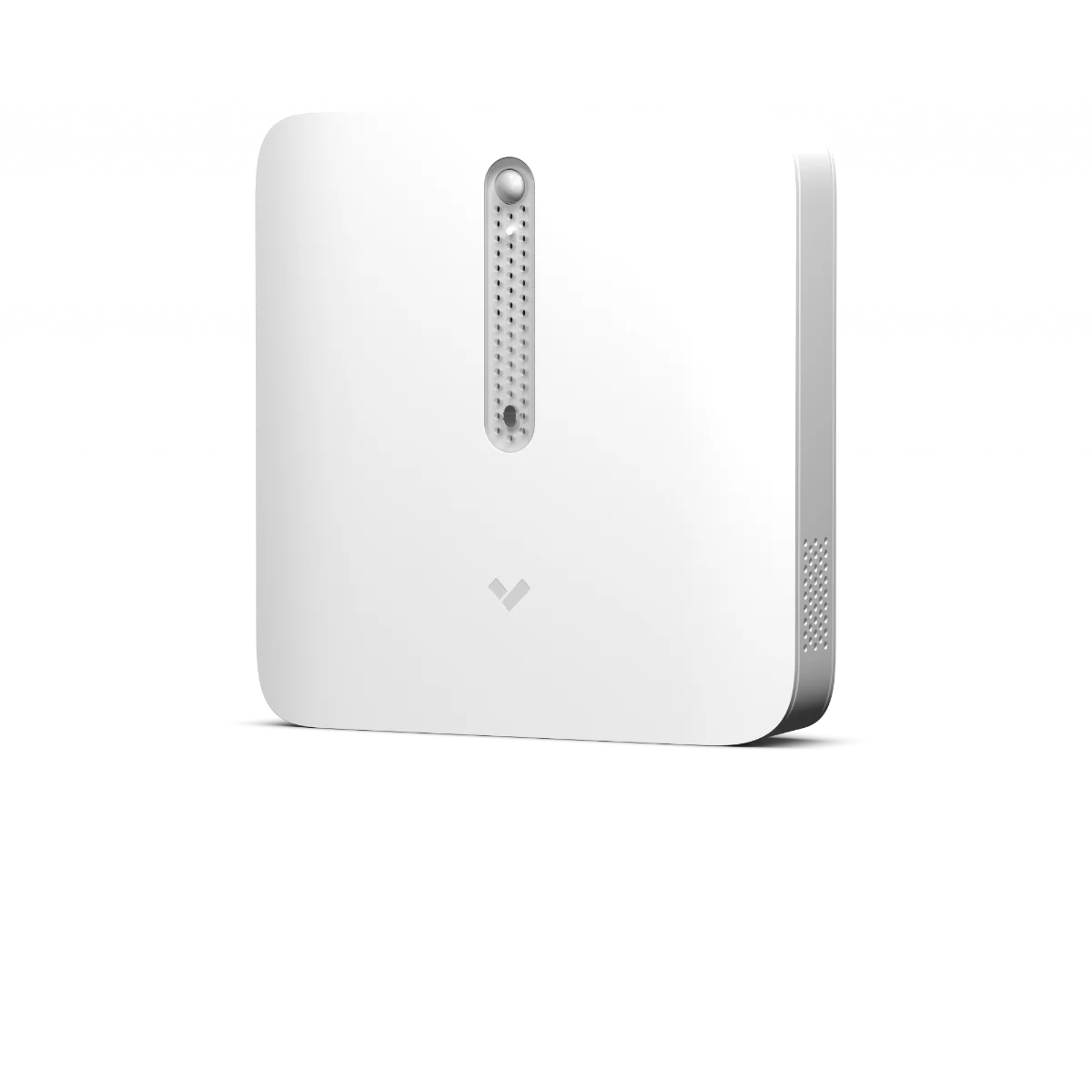 Environmental sensor · temp, humidity & door events
One alert layer for both kinds of loss
Cold storage, refrigerated distribution, and food processing carry a risk office warehouses don't: the product spoils. Environmental sensors put temperature and humidity on the same alert and audit layer as the cameras and doors, so the facility protects the cold chain and the building at once.
- Temperature & humidity — continuous monitoring per cooler and freezer, with threshold alerts.
- Door-open events — paired with the camera on that door, for fast cause-and-effect.
- Audit-ready logs — a continuous record that supports food-safety and quality programs.
- Sanitation zones — discreet, washdown-tolerant cameras for processing and packaging areas.
One Integrated Platform for Every Facility Type
One integrated platform runs cameras, access control, perimeter and yard protection, intercoms, alarms, and environmental sensors for every kind of industrial site — from one dashboard, across every building. This is what no camera retailer or guard service offers: a single system that scales from one warehouse to a national network, where each facility type gets the layers it actually needs and a multi-site operator sees all of them in one view. Below is how the same platform adapts to six common facility types.
Manufacturing plant
Production-line coverage, restricted tool and hazmat areas, intercoms at gates, and duress for line workers — without disrupting the process flow.
Cameras · access · duressDistribution / fulfillment
Dense dock coverage, yard LPR, high-rack camera placement, and access on every personnel door — built for round-the-clock throughput.
Docks · yard · LPR3PL / logistics
Multi-tenant, multi-site visibility from one dashboard — with per-customer access zones and the audit trail freight contracts demand.
Multi-site · audit trailCold storage
Temperature, humidity, and door-open monitoring on the same platform as cameras and access — protecting the cold chain and the building together.
Sensors · cameras · accessFood processing
Washdown-tolerant cameras in sanitation zones, sensor-backed quality logs, and access control on ingredient and finished-goods storage.
Sanitation · quality logsMachine shop / fabrication
Coverage of high-value equipment and material, tool-crib access control, and duress for small crews working alone after hours.
Equipment · tool cribOne dashboard, every site
Cameras, doors, perimeter, intercoms, alarms, and sensors for the whole network in a single browser view — no per-site servers.
Automatic updates
Cloud-managed firmware and security patches roll out on their own — no truck rolls, no unpatched DVR in a closet.
AI search across everything
Find a person, vehicle, or event across every camera and site in seconds — and share an expiring clip instead of a USB stick.
What Does Warehouse & Industrial Security Cost?
A warehouse and manufacturing security system is priced by component, and the total depends on facility size, the number of doors and docks, perimeter length, and how much of the system is monitored. Most projects are quoted as a mix of hardware, installation, and cloud licensing, with optional professional monitoring billed monthly. The planning ranges below are honest, integrator-grade estimates to help you budget — a facility security assessment turns them into a fixed, itemized quote for your building.
Warehouse & industrial security — cost factors
Installed, planning ranges| Component | What moves the price | Typical range |
|---|---|---|
| Camerasper camera, installed | What moves the priceType (dome, multisensor, PTZ, telephoto), resolution, mounting height, conduit runs | Typical range$600 – $1,500 |
| Access controlper door / gate | What moves the priceDoor hardware condition, reader type, dock vs. personnel vs. vehicle gate | Typical range$1,500 – $4,000 |
| Perimeter & LPRper lane / camera | What moves the priceRange required, power and network at the edge, plate-capture lanes | Typical range$1,200 – $3,500 |
| Intercomsper station | What moves the priceAudio vs. video, gate vs. dock vs. door, weatherization | Typical range$1,000 – $3,000 |
| Environmental sensorsper sensor | What moves the priceNumber of coolers/zones monitored, measurement types, placement | Typical range$200 – $600 |
| Cloud licensing & monitoringper device / month | What moves the priceLicense tier, retention length, optional 24/7 professional monitoring | Typical range$15 – $60 |
Ranges are planning estimates for budgeting and vary by facility, region, and existing infrastructure. They are not a quote. The high CPCs buyers pay to shop these terms ($14–$60+ per click) reflect how hard real pricing is to find — Monarch publishes ranges because you deserve a number before the sales call. Your assessment produces a fixed, itemized price.
Get a facility security assessment
A Monarch expert walks your docks, yard, production areas, and restricted rooms — and returns a camera-by-camera, door-by-door design with a fixed, itemized quote.
Why Manufacturers & Warehouse Operators Choose Monarch
Manufacturers and warehouse operators choose Monarch because we design, install, and support the entire system as one accountable partner — not a box of hardware and not a staffing contract. As a Verkada Authorized Reseller, Monarch Connected deploys enterprise cloud-managed security and stands behind the result with documentation and lifetime support. The difference shows up after the sale: when something needs attention, there is one number to call, and the team that picks up is the team that designed your system.
Walk the facility
A security expert maps docks, yard, production areas, racking, and restricted rooms against the risks on this page — and documents your existing equipment.
Itemized, fixed price
A camera-by-camera, door-by-door design with a fixed, itemized quote and a clean phasing plan — building by building, budget cycle by budget cycle.
One partner, for good
Licensed installers working around your shifts, staff training, and one number to call for the life of the system.
Talk to a warehouse & manufacturing security expert
A few fields, one business day. Whether you're securing a single warehouse, rolling out a standard across a distribution network, or adding perimeter and sensors to a plant — start here. Prefer the phone? Call (415) 326-3592.
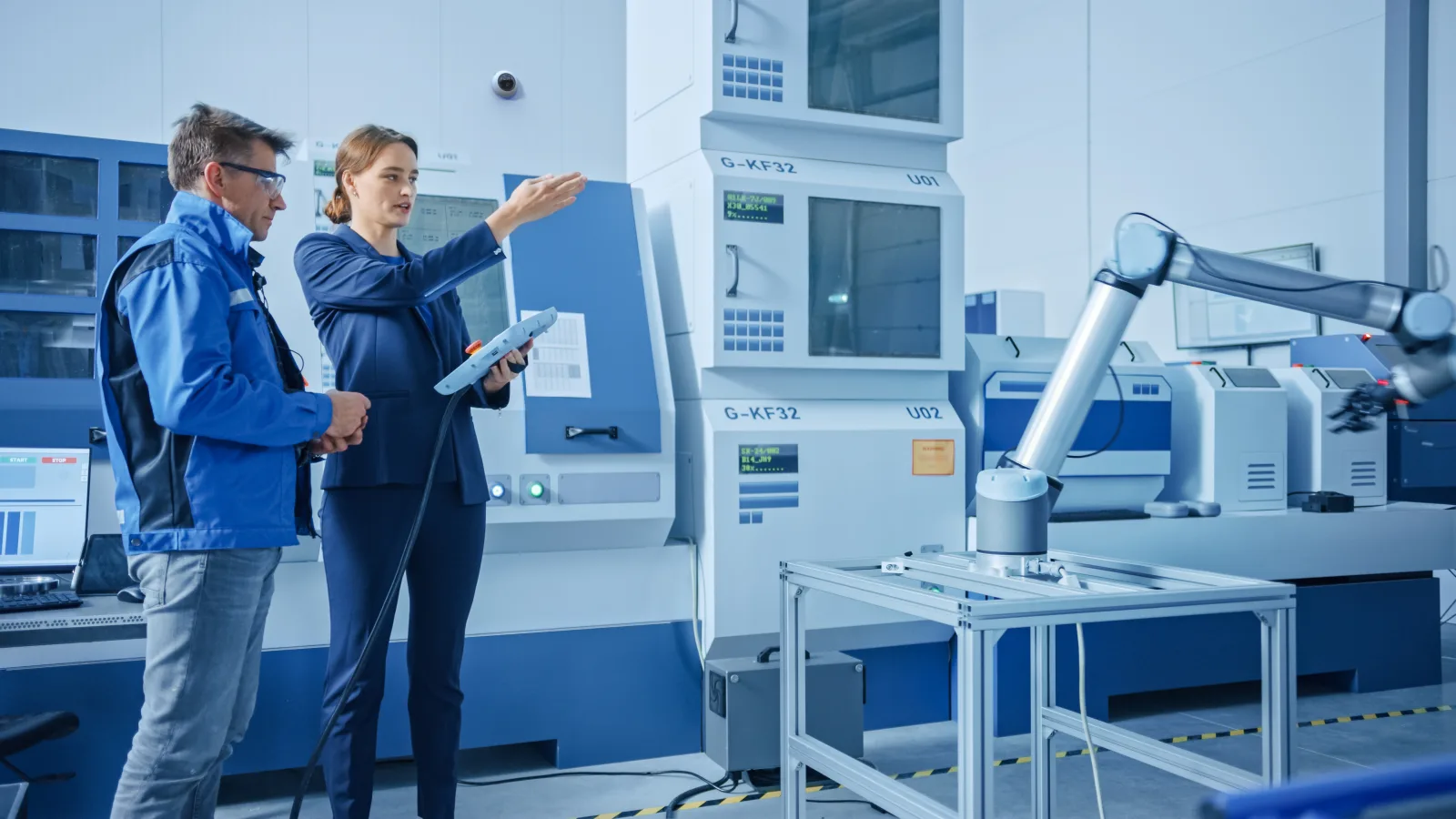 A real site walk · not a sales sequence
Warehouse & Manufacturing Security FAQs
The questions plant managers and warehouse leaders ask — answered straight.
How do you secure a warehouse?
You secure a warehouse in layers: cameras over loading docks, aisles, and high-value storage; access control on every personnel door, dock, and gate; perimeter and yard coverage with license-plate recognition at entrances; intercoms and staff duress at receiving and remote doors; and environmental sensors where product is climate-sensitive. The decisive move is putting all of it on one cloud platform, so an event at a dock door instantly pulls up the right cameras and the right doors react — instead of stitching separate systems together after the fact.
What is the best security system for a manufacturing facility?
The best security system for a manufacturing facility is one integrated, cloud-managed platform covering cameras, access control, perimeter, intercoms, and environmental sensors together — designed and installed by an integrator who walked the plant. A single platform means one dashboard for every shift, one audit trail, and one accountable partner, rather than a camera vendor, a door vendor, and a guard company who each blame the other when something fails.
How do warehouses prevent cargo theft?
Warehouses prevent cargo theft by controlling the dock and the yard, not just the building: license-plate recognition at every gate, cameras on each dock door tied to the dock-scheduling workflow, access control that logs who opened which door and when, and AI camera search that reviews a trailer's entire visit in seconds. The goal is to make every truck, trailer, and door accountable without slowing legitimate throughput. Industry trackers like CargoNet and the NICB document the rising trend that makes this the first place to invest.
How much does a warehouse security system cost?
A warehouse security system is usually quoted by component: cameras run roughly $600–$1,500 each installed depending on type, access control about $1,500–$4,000 per door, perimeter and license-plate cameras $1,200–$3,500 per lane, intercom stations $1,000–$3,000, and environmental sensors $200–$600 each, plus cloud licensing and optional monitoring billed monthly. These are planning ranges — a facility security assessment turns them into a fixed, itemized quote for your building.
What is the difference between a security integrator and a guard service?
A guard service provides people on site; a security integrator designs, installs, and supports the technology that protects the site. An integrator like Monarch builds the camera, access, perimeter, and sensor system, ties it to one cloud platform, and stands behind it with documentation and support. Many operators pair a lean guard presence with an integrated platform so a small team can see and respond across the whole facility, instead of relying on patrols alone.
How long should a warehouse keep security camera footage?
Most warehouse and manufacturing operations retain 30 to 90 days of footage, with longer retention on loading docks, cash or high-value areas, and anywhere claims and chargebacks are common. Cloud-managed cameras let you set retention per camera group and enforce it automatically, so dock cameras can hold 90 days while low-risk areas hold 30 — without a server in a closet or a tape nobody changed.
Can one platform cover cameras, access control, and perimeter for a whole plant?
Yes. Monarch deploys cameras, access control, perimeter and yard protection, intercoms, alarms, and environmental sensors on a single cloud platform, managed from one dashboard across every building and site. That integration is the point: a perimeter alarm cues the nearest cameras, a duress press locks the right doors, and a multi-site operator sees every facility in one view rather than logging into five systems.
Does Monarch design and install the system, or just sell hardware?
Monarch designs, installs, and supports the system — we are a security integrator, not a hardware reseller. A Monarch expert walks your facility, designs the camera-by-camera and door-by-door plan, installs and commissions every device, trains your team, and remains the single number you call for the life of the system. As a Verkada Authorized Reseller, we deploy enterprise cloud hardware and put our name on the result.
Talk to a Warehouse & Manufacturing Security Expert
Tell us about your facilities and a Monarch expert follows up within one business day — a real conversation about your docks, your yard, and your shift patterns, not a sales sequence. We design warehouse and manufacturing security across single sites and national networks, and we put our name on the result. Use the assessment form above, or call (415) 326-3592 to reach a security expert directly.
Secure the dock, the yard,
and everything between.
Warehouse and manufacturing security designed, installed, and supported by one accountable partner — on a platform built to scale from one site to the whole network.