


Let's cut to it. Smoke alarms in commercial buildings aren't the little disc you unscrewed at 2 a.m. in your apartment because it wouldn't stop chirping. They're part of an actual life-safety system — detection, notification, control — governed by NFPA 72 and enforced by whichever fire marshal happens to walk into your lobby with a clipboard. Get it right and nobody thinks about it. Get it wrong and you're either dealing with a preventable fire or an inspector using words like "life-threatening deficiency" and "24-hour correction timeframe."
So this post is the version I wish somebody had handed me the first time I had to answer "is our building compliant?" and realized I had no idea. We'll talk about what the code actually says, where devices go, how testing works, why kitchens are their own special nightmare, and what modern integration looks like when your fire panel starts talking to the rest of the building.
The Code Behind the Ceiling: NFPA 72 in Plain English
Here's the part everyone gets confused about (I got confused about it too, don't feel bad). There are basically two layers of code stacked on top of each other:
- The Building Code or Fire Code (IBC, IFC, your local amendments) decides WHEN you need a fire alarm system.
- NFPA 72, the National Fire Alarm and Signaling Code, decides HOW that system has to be designed, installed, tested, and maintained.
The Authority Having Jurisdiction — usually the fire marshal, sometimes an insurance authority — picks which edition of the code is enforced in your area. That's not a suggestion, that's the rulebook they will grade you against.
NFPA 72 covers a lot, but the parts that matter most for a building owner boil down to four things:
- Detection: where sensors go and what kind you use
- Notification: how loud, how bright, how clear the warning is
- Control: what the fire alarm control panel does with the signal
- ITM: inspection, testing, and maintenance on an ongoing schedule
Miss any one of those and the system might work on paper but fail on a Tuesday when it actually matters.
Detection: The Three Devices You'll Actually See
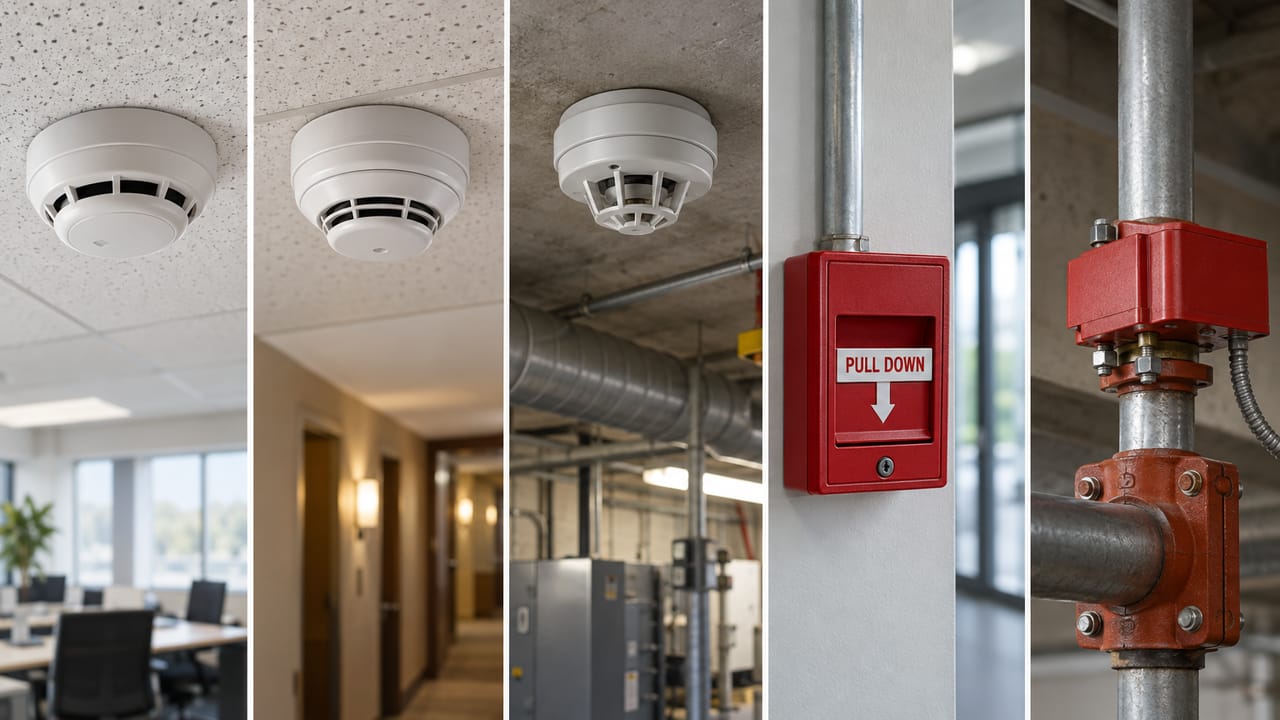
Commercial detection isn't one-size-fits-all. NFPA 72 (as summarized by VFS Fire & Security) breaks it down by what's on fire and how fast.
- Photoelectric smoke detectors are better at slow, smoldering fires — think an overloaded surge strip smoldering behind a filing cabinet for two hours. This is what most offices, hotels, and residential-style commercial spaces lean on.
- Ionization smoke detectors respond faster to flaming fires. NFPA notes that combination ionization-photoelectric alarms (dual sensor) give you the best of both worlds.
- Heat detectors don't care about smoke at all. They trigger on fixed temperature or rate-of-rise, which is why they're the go-to for kitchens, mechanical rooms, and parking garages where a smoke detector would false-trip every fifteen minutes.
- Manual pull stations let someone yank the handle before automatic detection catches up.
- Waterflow switches in sprinklered buildings tell the panel that water is moving, which usually means something is burning.
Picking the right sensor for the right room is the single biggest factor in whether your system is actually protecting people or just annoying them. A photoelectric detector six feet from a fryer is not a fire safety strategy. It's a nuisance-alarm generator with a UL sticker.
Where Devices Go: The Placement Rules Nobody Reads
This is where a lot of retrofits fall apart. The device is there — great — but it's four inches from a supply diffuser and it hasn't heard smoke since installation.
NFPA and HUD's NSPIRE standard both spell out the placement basics for smoke alarms in commercial buildings. Pulling from NFPA's installation guidance and the NSPIRE Smoke Alarm standard:
- Mount high on walls or ceilings. Smoke rises. Not exactly breaking news, but you'd be shocked how many are installed at eye level "for easy testing."
- Ceiling-mounted units must be more than 4 inches from the wall.
- Wall-mounted units: the top of the alarm sits between 4 inches and 12 inches down from the ceiling.
- Keep detectors at least 10 feet from cooking appliances to cut nuisance alarms.
- Don't install near windows, doors, or HVAC ducts — drafts wash smoke away from the sensor.
- Never paint, sticker, or decorate a detector. It sounds obvious. It happens constantly.
On smooth ceilings, spot-type smoke detectors can be spaced up to 30 feet apart, but the 0.7 rule means every point on the ceiling should be within 21 feet of a detector. Ceiling height, beams, and airflow all shrink that spacing. This is a designer's job, not a "measure it out with a tape and eyeball it" job.
HUD's NSPIRE standard — which applies to HUD-covered housing units and classrooms, not general commercial occupancies — flags three life-threatening deficiencies inspectors will fail you on in those settings: missing detectors where required, obstructed detectors (a plastic bag, zip tie, tape, paint), and detectors that don't produce an audio or visual alarm when tested. In NSPIRE-covered properties, the correction window on all three is 24 hours. For other commercial buildings, correction timeframes are set by your AHJ and the applicable code.
Notification: Loud, Bright, Clear — In That Order
Detecting a fire is only half the job. The system has to actually tell people. NFPA 72's notification rules are more specific than most owners realize.
- Audible alarms in public mode must be at least 15 dBA above the average ambient sound level, or 5 dBA above the maximum sound level lasting 60 seconds or more, whichever is greater. Translation: a factory floor needs a much louder horn than a law firm.
- Visual signaling (strobes) is required in high-noise areas and for occupants with hearing impairments. In big open spaces, strobes must be synchronized so people with photosensitivity don't get disoriented (or worse).
- Emergency Communication Systems with voice evacuation are increasingly common — instead of a horn, you get spoken instructions guiding people out. High-rises, schools, hospitals, and larger assembly spaces are trending this direction fast.
The Fire Alarm Control Panel: The Brain in the Closet
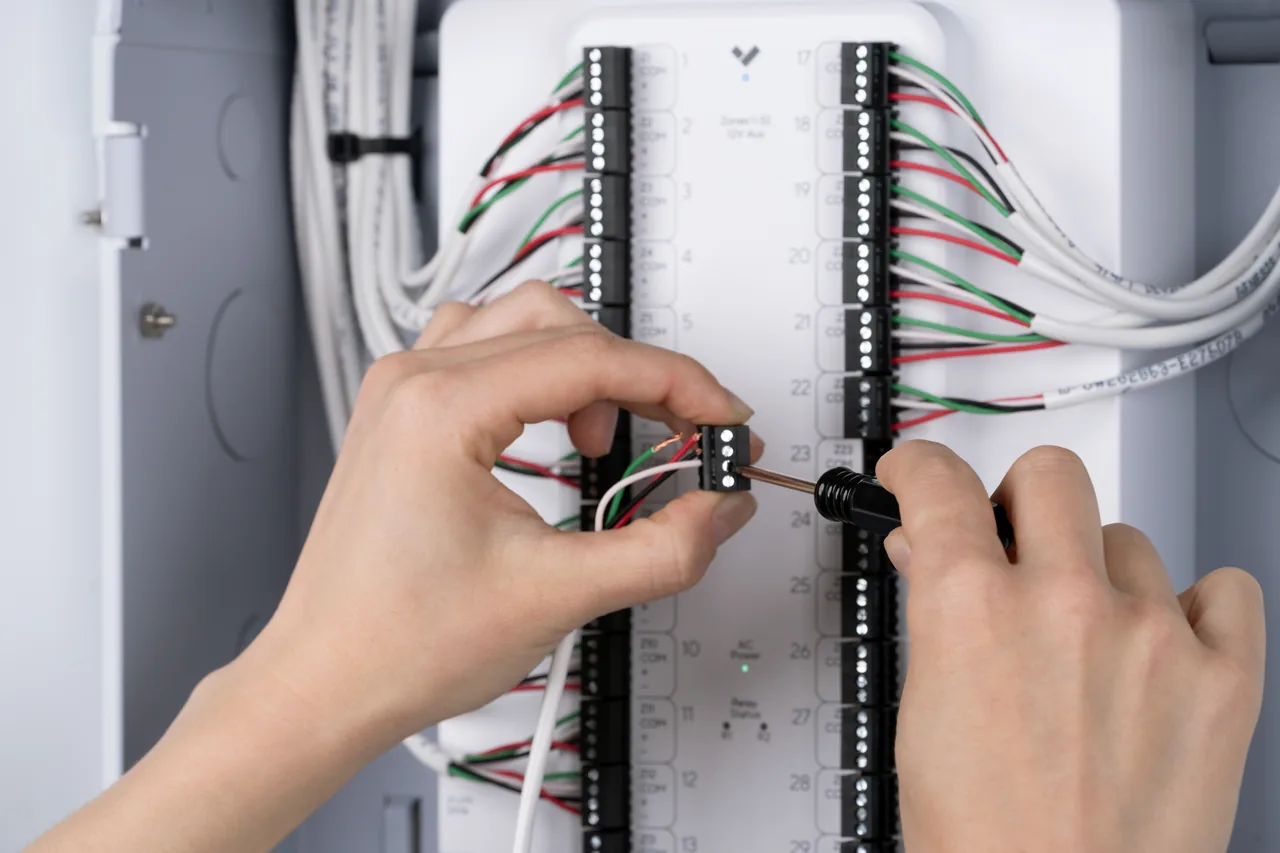
The Fire Alarm Control Panel (FACP) is the box everyone ignores until it starts beeping. It processes every signal, identifies where the alarm originated, and monitors itself for trouble conditions — wire faults, primary power loss, battery failure, communication pathway interruptions.
Which brings me to the single most ignored rule in the whole industry: don't ignore trouble signals. That chirp isn't the panel being dramatic. It's telling you a zone is offline, a battery is dying, or the supervising station stopped hearing from you. Silence it without fixing it and you've quietly turned your life-safety system into expensive wall art.
The Restaurant Fire Alarm System Problem
Restaurants deserve their own section because they're the hardest commercial environment to protect without driving everyone insane.
Any restaurant fire alarm system has to survive an environment full of steam, grease vapor, flour dust, open flame, and cleaners who occasionally think it's fine to bag a detector "just for tonight." A single false alarm during dinner service costs a restaurant a full seating turn — sometimes the whole night — so operators have massive incentive to disable things they shouldn't. Bad idea. Do this instead:
- Use heat detectors, not smoke, in the cook line and dish pit.
- Use photoelectric smoke detectors in the dining room and back-of-house corridors, staying 10 feet from any cooking equipment.
- Tie the hood suppression system into the fire alarm panel so a suppression discharge automatically signals the panel.
- Keep pull stations at every exit path, including the back door the staff actually uses.
- Never — and I cannot stress this enough — never bag, cover, or unplug a detector to get through a shift.
The commercial kitchen exhaust and grease hood side of that puzzle has its own standard (NFPA 96), but the alarm-side integration lives under NFPA 72. Both have to line up.
Inspection, Testing, and Maintenance: The Part Everyone Skips
Chapter 14 of NFPA 72 is where compliance is actually won or lost. Three activities matter:
- Visual inspection — walk the building, look for damaged, painted, or obstructed devices.
- Functional testing — use test smoke or a magnet on the sensor to confirm each device actually triggers the panel and the notification appliances.
- Sensitivity testing — confirm smoke detectors are still responding within their listed range. Detectors drift over time. That's why "it's been there for 20 years and it's fine" is not a compliance answer.
Records have to be kept. As-built drawings, inspection reports, and maintenance logs all have to be available for the AHJ. And no, pressing the test button on the unit doesn't count as a system test — that only confirms the local horn works, not that the signal made it to the panel or to the monitoring center.
Where Modern Integration Comes In
Here's where the industry is going, and honestly where a lot of the interesting stuff happens. The fire alarm panel is still its own dedicated life-safety system (as it should be — you don't want your fire alarm sharing a server with the guest WiFi). But the surrounding sensors, cameras, and access control are increasingly integrated so a single event can drive multiple responses at once.
Cloud-connected environmental sensors can flag vape, air quality issues, or unusual heat in areas where a full fire detector doesn't belong — bathrooms, storage rooms, mechanical spaces. Video from AI-driven surveillance and sensor platforms can visually verify an alarm before responders arrive, cutting false-dispatch fees and giving the fire department situational awareness on the way in. Access control can automatically unlock egress doors and lock down others the moment the panel goes into alarm. If you're planning a broader upgrade, our team can help you scope the full commercial security stack so fire detection, cameras, and access all talk to each other instead of pretending the other systems don't exist.
None of that replaces NFPA 72. It sits alongside it, and it makes the whole building smarter without touching the certified life-safety loop.
What To Do This Week
If you own or manage a commercial property and you're not 100% sure where you stand, here's the short list:
- Find out which edition of NFPA 72 your AHJ enforces.
- Pull your last inspection report and check the date against the testing intervals your AHJ and code edition require — if you're past due, you may already be out of compliance.
- Walk the building and look for painted, taped, bagged, or missing detectors. Fix any you find today.
- Verify your monitoring center is actually receiving signals (a lot of buildings quietly lose supervision when phone lines get cut over to VoIP).
- Get a NICET-certified technician to do a functional test if it hasn't been done recently.
Or skip the DIY audit and talk to us directly — we'll help you figure out what your building actually needs versus what a salesperson wants to sell you.
FAQ
Are smoke alarms required in every commercial building?
Not automatically — the Building Code or Fire Code adopted in your jurisdiction determines whether a fire alarm system is required based on occupancy type, size, and use. Once required, NFPA 72 governs how it must be designed and maintained. Your local Authority Having Jurisdiction is the final word on which requirements apply to your specific building.
How often do commercial smoke alarms need to be tested?
NFPA 72 Chapter 14 requires ongoing inspection, testing, and maintenance, with functional testing typically performed annually and visual inspections more frequently. Sensitivity testing on smoke detectors is required on a longer cycle to make sure they haven't drifted out of range. Your AHJ and the specific code edition they enforce set the exact intervals, and all activity has to be documented for inspection review.
Can I use residential-style smoke alarms in a commercial building?
Generally no. Commercial systems use system-connected detectors that report to a Fire Alarm Control Panel, which then handles notification and supervising-station communication. Standalone battery alarms don't provide the monitoring, integration, or documentation that NFPA 72 requires for commercial occupancies. There are narrow exceptions in some small commercial spaces, but always confirm with your AHJ.
What's different about a restaurant fire alarm system?
A restaurant fire alarm system has to handle steam, grease vapor, and high ambient heat without constant false alarms, which usually means heat detectors in cooking areas and photoelectric smoke detectors kept at least 10 feet from cooking appliances. Hood suppression systems also need to tie into the fire alarm panel so a suppression discharge automatically signals an alarm. Nuisance alarms are the biggest operational risk, so device selection and placement matter more here than almost anywhere else.
What happens if my building fails a fire alarm inspection?
Correction timeframes depend on the standard your building falls under and the AHJ enforcing it. Under HUD's NSPIRE standard, which applies to HUD-covered housing units and classrooms, life-threatening deficiencies — missing detectors, obstructed detectors, or units that don't produce an audio or visual alarm when tested — carry a 24-hour correction timeframe. For other commercial occupancies, check with your local AHJ for the applicable correction windows. Ignoring findings can result in occupancy restrictions, fines, or in the worst case, insurance non-renewal.
Do sprinklers replace the need for smoke detection?
No, and this is one of the most common misconceptions. Sprinklers control or suppress a fire once it's already producing enough heat to open a head, while smoke alarms detect the fire early enough to evacuate people before it gets to that point. They serve different life-safety roles and are designed to work together, not as substitutes.