


What a Perimeter Intrusion Detection System Actually Does
Updated September 16, 2026.
A Perimeter Intrusion Detection System (PIDS) is the outer detection ring of a physical security program. Its job is to notice when something or someone crosses a boundary before they reach the building, the assets, or the interior alarm system. The value is time: the earlier detection happens, the more options a responder has.
This guide covers how PIDS work, the main sensor categories, where each one struggles, and the questions worth asking before buying one. The four sensor categories and much of the selection guidance here follow the UK National Protective Security Authority's Guide to Perimeter Intrusion Detection Systems, which is a good primary reference for anyone specifying a system.
The Four Categories of PIDS
Per NPSA, PIDS technologies fall into four categories:
- Barrier-mounted — sensors attached to a fence or physical barrier (microphonic cable, fiber optic strain, electrified fence)
- Ground-based — buried sensors such as RF radiating fields, microphonic cable, optical-fibre cable, or balanced fluid-filled tubes
- Free-standing — above-ground sensors that don't need a barrier (active infrared beams, PIR, bistatic and Doppler microwave, laser scanners, video analytics)
- Rapidly deployable — battery-powered, wireless-transmitting temporary systems using any of the above sensing methods
None of these is universally "best." The right choice depends on the perimeter, the environment, the threat, and how a response will actually be initiated.
What Each Category Is Good and Bad At

Barrier-Mounted Sensors
Strengths: the barrier itself provides physical delay, which aids alarm verification and response. Some systems cover a full perimeter with one cable run and processing unit, which can lower infrastructure cost on long runs.
Weaknesses: fence and topping vibration in high winds is a significant source of false alarms, per NPSA. Resilience can also be a concern if a whole run depends on a single processor and power supply.
Consideration for electrified fences: NPSA notes they tend to have low false alarm rates and act as a deterrent, but wire strands need regular inspection, and conductive build-up (salt in coastal areas, for example) can cause false alarms on insulators.
Ground-Based Sensors
Strengths: covert, aesthetically unobtrusive once installed, and generally less weather-affected than above-ground options.
Weaknesses: installation is disruptive and generally expensive due to ground works, and performance is affected by ground water saturation. RF radiating-field systems can degrade with surface water and the RF emissions can be detected and interfered with. Microphonic cable is susceptible to nearby heavy traffic and pressure from tree roots or vegetation in wind. Balanced fluid-filled tube systems have higher maintenance overhead — pressure checks at least annually — and access pits can compromise covertness.
Ground-based systems provide no delay or deterrence unless paired with a barrier, so a prompt response capability is required.
Free-Standing Sensors
Strengths: lower installation cost than ground-based, and they don't hinder legitimate vehicle movement.
Weaknesses (per NPSA, by type):
- Active infrared: susceptible to fog; requires flat ground because undulations create dead zones; long-range alignment can be difficult.
- PIR: poor immunity to temperature changes makes it less suited outdoors; careful positioning needed to avoid sunlight-triggered false alarms.
- Bistatic microwave: dead zones near receiver and transmitter (usually mitigated by overlapping zones); performance affected by metallic objects and moving water; needs a well-maintained detection area.
- Doppler microwave: dead zone near the transceiver; a maximum range exists beyond which targets can move undetected.
- Laser scanner: can be affected by rain and fog; often used where cost constraints rule out other options.
- Video analytics: NPSA describes these as generally configured for a greater-than-95% detection rate, but views can be obscured by fog, they require re-configuration for seasonal variation, need a high-quality video feed, and may demand camera or lighting upgrades.
Like ground-based sensors, free-standing systems provide no delay without a barrier.
Rapidly Deployable Sensors
Strengths: portable, no permanent infrastructure required, short set-up time.
Weaknesses and limits: battery power means downtime for charging or replacement, and wireless alarm transmission is generally less secure than hard-wired. Critically, NPSA states that for higher protection levels (SEAP ENHANCED or HIGH, or Class 2, 3, and 4), rapidly deployable PIDS using wireless communications as the primary link must only be used for a maximum of two weeks, and the system requires re-commissioning after that period to re-assess risk and confirm the wireless link's integrity. That is a material limitation for anyone considering "temporary" deployments as a long-term stopgap.
How Sensors Decide Real vs Noise
The hard part of any PIDS deployment isn't the sensor — it's the discrimination logic. NPSA and CAST evaluate PIDS against defined performance standards, and the categories above make clear that every sensor type has known false-alarm sources (wind, wildlife, fog, sunlight, water, root movement).
Common approaches to reduce nuisance alarms:
- Multi-sensor correlation — requiring two independent sensor types to agree before an alarm is treated as valid
- Zone-based rules — different sensitivity or logic per section of perimeter
- Alarm verification via CCTV — NPSA recommends imagery from immediately before, during, and after an alarm, with camera and PIDS zones matched and images auto-presented to the operator
- Tuning during commissioning — sensitivity set based on site walks in different weather and times of day
Careful zone definition matters: if PIDS zones don't line up with camera views, verification breaks down.
Layered Defence
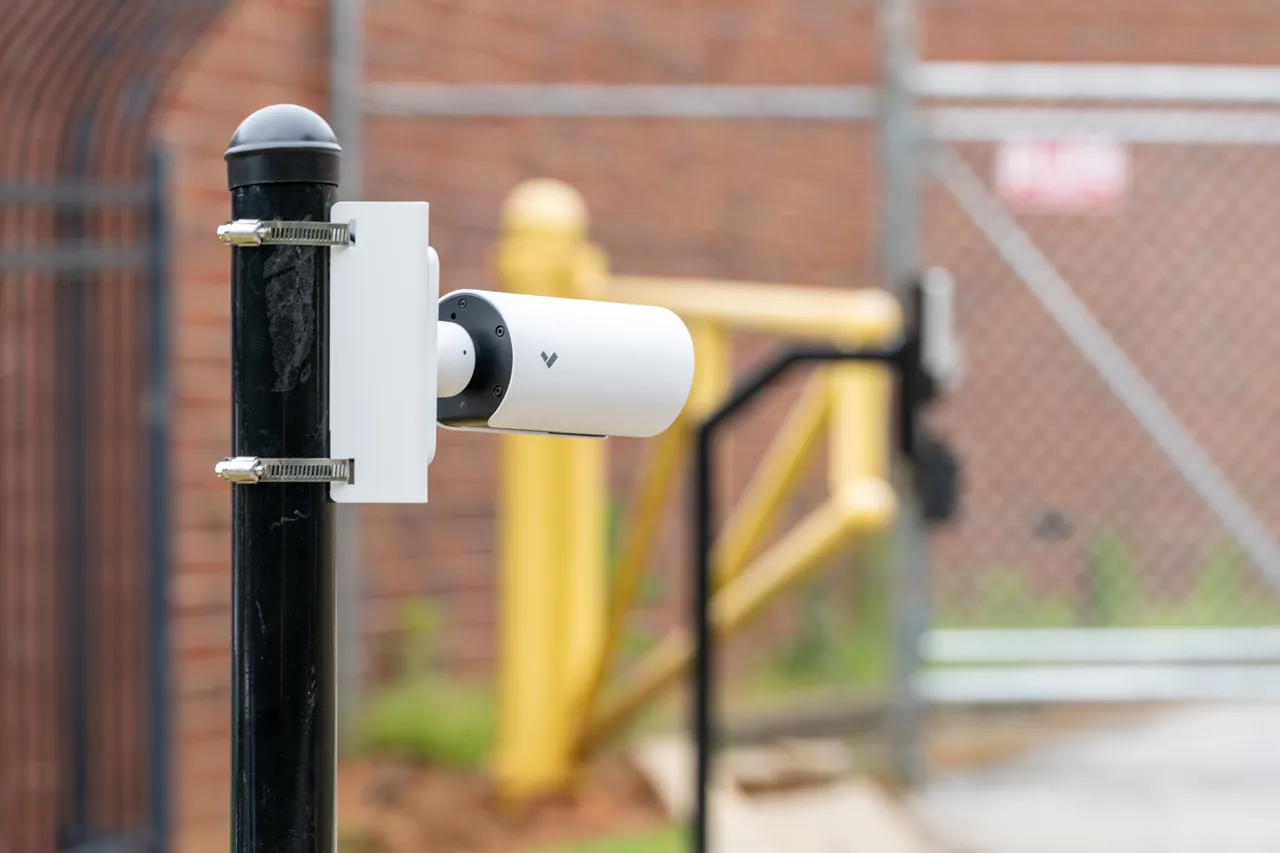
No single sensor covers every failure mode. A layered design might combine, for example, a free-standing outer detection layer, a barrier-mounted sensor on the fence itself, and video analytics inside the sterile zone, feeding an access control system that can lock down doors and gates on alarm. Each layer buys time and adds an independent chance of detection.
The detection layers should feed the access control system so that response actions can be automated at gates and doors. See our overview of AI-powered surveillance for how modern classification changes what video analytics can do relative to older motion-detection algorithms.
Environmental and Site Questions to Ask Before Buying
NPSA's selection guidance is essentially a checklist of site factors. Before requesting quotes, work through these:
- Environment: Is there already a barrier? Existing infrastructure to mount on? Public footway nearby that could trigger alarms? Underground services that would block ground-based install?
- Climate: Strong winds? Fog that would obscure video? Heavy rain? Direct sun on sensors?
- Landscape: Local wildlife, water bodies, ground undulation, seasonal saturation?
- Deployment: Permanent or temporary? Covert or overt? Expected service life and maintenance schedule?
- Integration: What other systems (lighting, CCTV, audio) will it work with, and who owns integration?
- Response: On-site control room or remote monitoring? Is there anyone actually available to respond to an alarm?
- Regulations: EMC compliance (BS EN 50130-4 for security equipment in the UK), safety regulations, special environments (e.g., explosive atmospheres requiring intrinsically safe equipment).
Power, Comms, and Resilience
NPSA is explicit that wireless alarm transmission is not recommended for permanently installed PIDS at higher protection levels because of denial-of-service, substitution, and replay attack risks. Even where wireless is used, a back-up or secondary communications link is required and should be tested during operational checks.
Back-up power is similarly non-negotiable: if mains fails, the PIDS still needs to detect and signal. Ask vendors specifically what happens on power loss, how long standby power lasts, and whether CCTV remains available for alarm verification during an outage.
False Alarms: The Practical Problem
Every sensor category above has documented nuisance-alarm sources. When operators see too many false alarms, they stop treating alarms as urgent — and a real intrusion gets ignored. Fixes are usually one of:
- Add a second, independent sensor type for correlation
- Re-tune sensitivity or mask specific zones
- Improve camera coverage so operators can verify quickly
- Address the source (trim vegetation, adjust fence tension, add lighting)
A good integrator should walk the site at different times and weather before finalising sensitivity settings, and commissioning documentation should record those settings so they can be reviewed later.
Integration With Cameras and Access Control
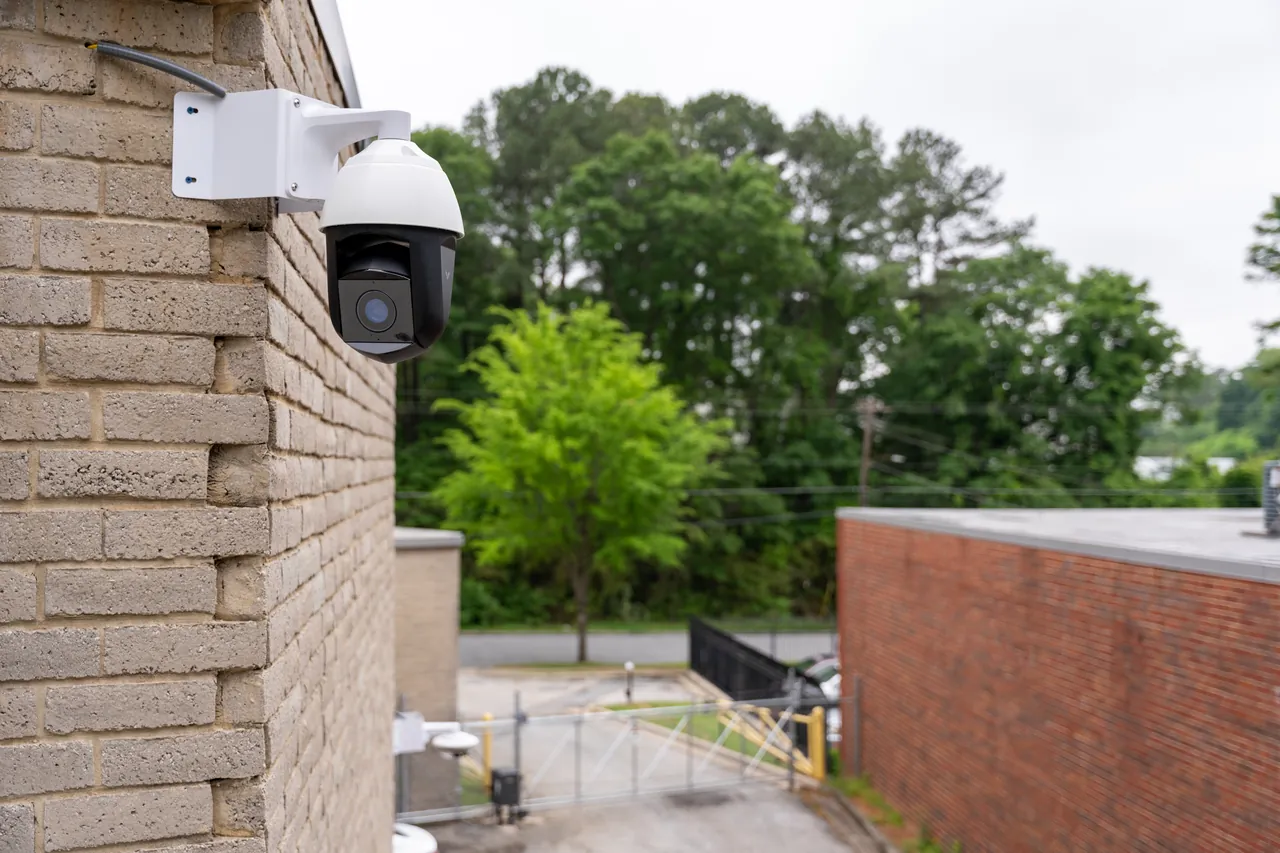
A PIDS that doesn't talk to CCTV or access control is doing half the job. Typical integrations:
- Perimeter alarm auto-slews a PTZ to the zone and bookmarks the clip
- After-hours tripwire triggers exterior door lockdown and pushes notifications
- Gate beam-break raises barriers and logs a plate via LPR
If you're evaluating platforms, ask specifically how the sensor, camera, and door layers are tied together — whether that's on one vendor's stack or via documented integrations. You can browse compatible cameras and accessories in our equipment catalog.
What Drives Cost
Rather than quote ballparks that won't match your site, here are the variables that actually move the number:
- Perimeter length and shape (long straight runs favour continuous-cable systems)
- Terrain and ground conditions (ground-based install is disruptive and expensive)
- Existing infrastructure (power, network, fence condition, mounting points)
- Sensor mix and number of processing units required
- Integration scope with existing CCTV, access control, and control-room software
- Monitoring arrangement (on-site vs remote)
- Maintenance regime — for example, annual pressure checks on fluid-filled tube systems
Get a site assessment before accepting any per-metre or per-camera number. If you want one, our team can walk your site.
Common Deployment Mistakes

- Specifying sensors before writing an Operational Requirement. NPSA is emphatic that a detailed OR should come first.
- Naming a single product in tender documents. NPSA advises listing products from the Catalogue of Security Equipment that meet the required grading, to avoid liability disputes if performance disappoints.
- Skipping the response plan. Detection without a defined response is a log file.
- Ignoring lighting for video analytics — or ignoring seasonal re-configuration.
- Using rapidly deployable wireless systems beyond their intended short-term window at higher protection levels.
- Forgetting cybersecurity. Networked sensors are endpoints and should be treated as such.
For more on hardening connected security gear, our piece on video security software covers relevant ground.
Who Actually Needs a PIDS
PIDS is generally appropriate where there is a defined perimeter, valuable assets behind it, and a meaningful gap between detection and response that on-site staff alone can't close. Typical settings include industrial yards, logistics and distribution centres, utilities, data centres, critical infrastructure, equipment yards, cannabis facilities, and large campuses.
A small office in a strip mall usually doesn't need PIDS; the interior alarm and cameras are enough.
The DHS perimeter intrusion detection sensor resource provides an additional technology-assessment reference. Use it alongside the selected product’s documentation and a site test rather than treating a category description as a performance guarantee.
FAQ
What's the difference between a PIDS and a regular alarm system?
A regular intruder alarm typically protects the interior — doors, windows, internal motion detection. A PIDS covers the outer boundary, giving earlier warning and more response time before an intruder reaches the building.
How accurate are modern PIDS?
NPSA describes video analytics systems as generally configured for a detection rate above 95%, subject to conditions like fog and image quality. Accuracy in practice depends heavily on sensor mix, tuning, and whether alarm verification (usually CCTV) is set up properly. There is no single accuracy figure that applies across sensor types.
Can perimeter detection work in heavy snow, rain, or fog?
Some sensors handle weather better than others. Per NPSA, fog is a known problem for active infrared and video analytics; heavy rain and surface water reduce performance of RF ground-based systems; wind causes fence-mounted false alarms. Mixing sensor types is the standard mitigation — don't rely on a single technology that has a documented weakness in your local conditions.
Can rapidly deployable PIDS replace a permanent system?
Not at higher protection levels. NPSA states that rapidly deployable PIDS using wireless communications at ENHANCED or HIGH Protection Level (or Class 2, 3, 4) must only be used for a maximum of two weeks, with re-commissioning required after that period. They are designed for temporary cover, not as a substitute for permanent infrastructure.
What should be in the specification?
At minimum: areas to be protected (including perimeter length), physical constraints, environmental conditions, threat types, acceptable performance levels, operator interface, alarm transmission approach (with back-up link), tamper detection expectations, alarm verification method, power and standby-power requirements, and EMC compliance. NPSA's guide has a fuller list.