


Updated September 16, 2026.
Your smoke detector doesn't call the fire department. Something has to receive that signal, interpret it, and pick up the phone. In commercial buildings, that "something" is typically a central station fire alarm monitoring service — an off-site, listed facility sitting between your fire alarm control unit and the responding fire department.
If you've assumed your panel "just handles it," this article is for you. Below is a practical walkthrough of what a central station does, how the codes categorize monitoring, and the questions worth asking before you sign a monitoring contract.
What a Central Station Actually Does
A UL-listed central station is a constantly attended facility that receives signals from fire alarm control units at protected properties, processes those signals, notifies the fire department, and dispatches personnel to the site when needed.
Under NFPA 72, a Central Station Service Alarm System is more than just monitoring. According to the National Fire Sprinkler Association's summary of NFPA 72 Chapter 26, central station service is a bundled set of responsibilities that includes alarm system installation (or contractual responsibility for it), monitoring, retransmission of alarms, record keeping, testing, and maintenance. Runner responsibilities are discussed separately below. A "prime contractor" carries the compliance responsibility and issues documentation that the service meets NFPA 72.
UL Solutions notes that not every fire alarm system monitored at a listed facility is actually a "central station service" system in the code sense — many are remote station arrangements with far fewer built-in obligations. That distinction matters when a plan reviewer or insurance carrier asks for proof of central station service specifically.
NFPA 72's supervising station chapter references UL 827, Standard for Central-Station Alarm Services, as the listing standard for central stations. If a vendor calls themselves a "central station," ask to see the listing and confirm that the specific property will be covered under a UL certificate for central station service, not just generic alarm monitoring.
Central Station vs. Remote Station vs. Proprietary Supervising Station
NFPA 72 defines three types of Supervising Station Alarm Systems, and they are not interchangeable. The NFPA's own overview of off-premises signaling summarizes them this way:
- Central Station Service Alarm System. A remotely located supervising station listed to UL 827 that, in addition to monitoring, provides record keeping, testing, and runner service. Often required by code or insurance for certain occupancies; also chosen by owners who want a single contract covering monitoring plus inspection, testing, and maintenance.
- Proprietary Supervising Station Alarm System. A supervising station under the same ownership as the buildings it monitors — common for large campuses, industrial plants, hospitals, airports, and multi-location retailers with an in-house monitoring center.
- Remote Supervising Station Alarm System. A constantly attended location that receives signals from various protected premises, typically under different ownership. Contracts are usually limited to monitoring and recording; other services (installation, ITM) stay with the owner. Municipalities sometimes operate remote stations to receive signals at their communication center.
Which category applies to a given building is driven by the adopted building and fire codes, the AHJ's determination, and any insurance requirements — not by what the alarm company chooses to call itself.
For a broader look at how monitoring ties into the rest of a building's fire alarm design, see our overview of automatic fire alarm systems.
How the Signal Travels
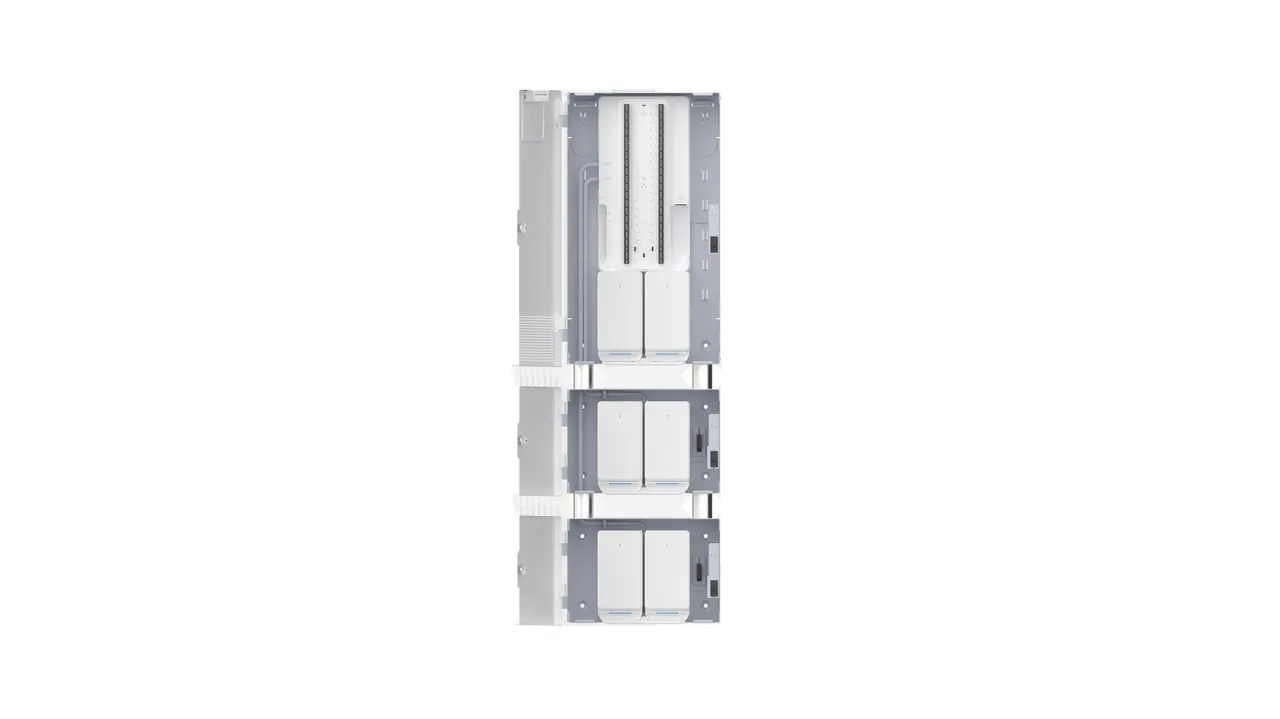
NFPA 72 permits several transmission methods between the fire alarm control unit and the supervising station, including both wired and wireless paths. In the field you'll typically see:
- Legacy digital communicators over telephone lines. Still installed in many older buildings. As copper infrastructure is retired, these are increasingly being replaced.
- IP and cellular communicators. The most common approach in new installations, often deployed as a dual-path setup so a single failure doesn't leave the panel unable to signal.
- Radio and mesh systems. Used in some jurisdictions where a municipal or private radio network carries alarm signals.
Whatever the path, NFPA 72 requires the transmission means to be supervised so that a failure is detected and reported. The specific supervision intervals depend on the transmission technology and the section of NFPA 72 that applies; a fire alarm designer or the AHJ should confirm what applies to your installation rather than assuming a single universal timer.
Ask the fire alarm designer to document the proposed communications paths, supervision requirements and fault-response process for the approved installation. Confirm how a path failure is reported and who acts on it.
What Happens When Your Panel Trips
Consider a hypothetical late-night activation of a smoke detector in a mechanical room:
- The detector activates and the fire alarm control unit registers an alarm, drives the local notification appliances (horns, strobes, voice evacuation), and transmits an alarm signal through the communicator.
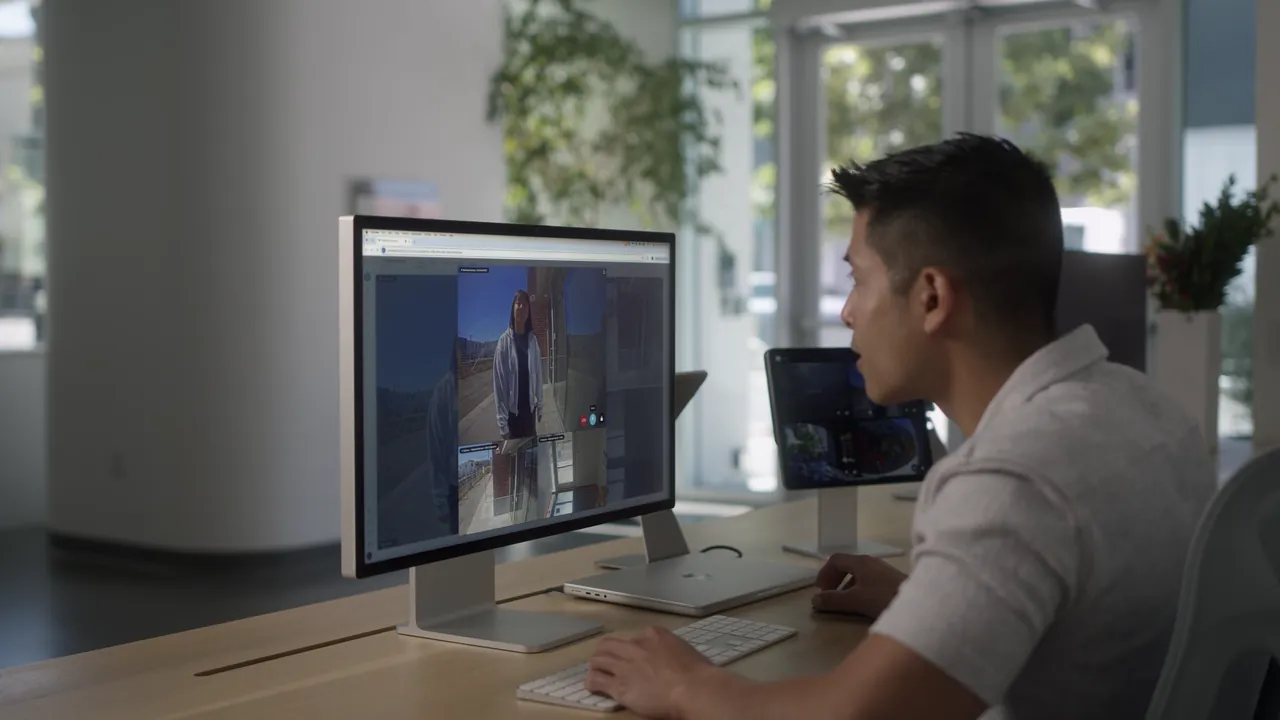
- The signal is received at the supervising station. The operator's screen displays the account, device address, signal type, and the site's dispatch instructions.
- Per NFPA 72 26.2.2, alarm signals must be "immediately" retransmitted to the communications center. The NFSA notes that NFPA 72 does not define "immediately" as a specific number of seconds; the annex describes it as "without unreasonable delay." NFPA 72 also allows limited verification of alarm signals under certain conditions before the fire department is dispatched.
- After retransmission, the operator works through the site's notify list — facility manager, on-call maintenance, and other designated contacts.
- Every action is timestamped in the event log. Those logs matter for post-incident review, fire marshal inquiries, and insurance claims.
Handling of supervisory and trouble signals differs from alarm signals; NFPA 72 has separate disposition and response requirements for each.
Runner Service and Signal Restoration
Central station service can include on-site runner or technician responsibilities as well as remote monitoring. UL Solutions’ explanation discusses those distinctions.
Ask the provider to document the applicable response and restoration requirements for the adopted code edition and approved service arrangement. Identify who is dispatched, how coverage is maintained when a signal is not restored and who notifies the responsible authority. Confirm the written scope with the fire alarm professional and authority before signing.
Codes, Inspections, and the Stuff That Trips Up Building Owners
NFPA 72 is the reference document, and Chapter 26 covers supervising station alarm systems. Enforcement is up to the AHJ — usually the local fire marshal — working from whichever edition of NFPA 72 the jurisdiction has adopted.
A few things that regularly cause problems:
- Inspection, testing and maintenance. Have the responsible professional provide the applicable schedule for each system component and task. Keep the reports and corrective-action records; do not assume one annual visit covers every requirement.
- Current call lists. If contact information points to someone who left the company two years ago, dispatch and notification will stall. Review the account quarterly.
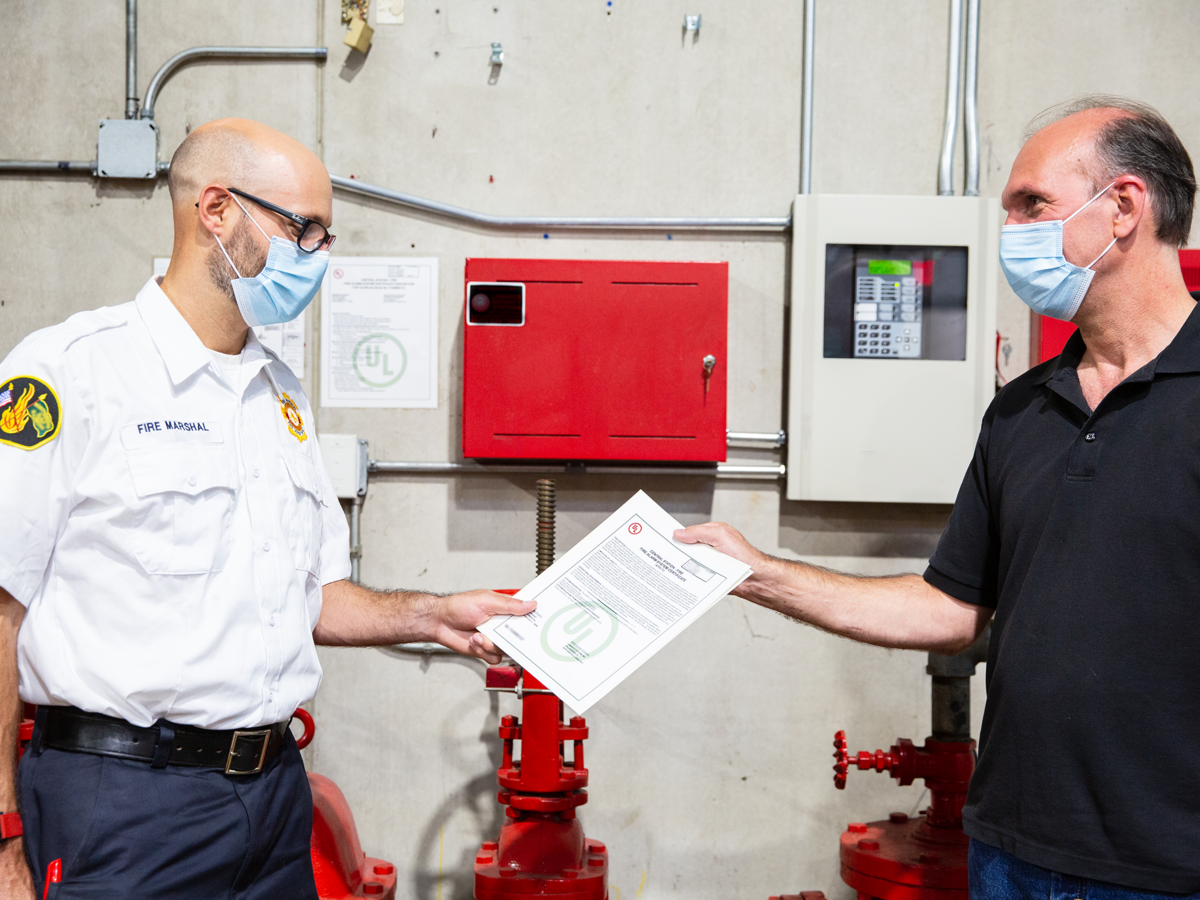
- Documentation of central station service. Current model codes require the prime contractor to issue a document confirming compliance with central station service requirements. UL's fire alarm certification program is one common way this is demonstrated.
- Communication path supervision. Configuration should match the code edition and any AHJ conditions on your permit. Ask your integrator for the specific NFPA 72 section their configuration meets.
If alarm monitoring sits alongside cameras, access control, and intrusion detection in your building, unifying those systems reduces day-to-day management overhead. Our equipment catalog shows the components we typically deploy alongside monitored fire systems.
What to Ask a Prospective Monitoring Provider
A short list of practical questions to put to any provider before signing:
- Are you UL-listed for central station service under UL 827, and can you provide the certificate? For the specific property, will it be covered as central station service or as remote station monitoring?
- Who is the "prime contractor" of record, and will you issue the NFPA 72 document indicating compliance with central station service?
- What transmission method and supervision interval do you propose, and which section of NFPA 72 does it satisfy?
- How is runner service provided in my area, and what is the contractual response window relative to NFPA 72's two-hour and four-hour requirements?
- Do you operate redundant, geographically separated facilities? What happens to my signals if your primary site goes offline?
- Can I access a customer portal with real-time event history, and how do I update call lists and test schedules?
- What is the initial term, renewal structure, and cancellation process? Multi-year auto-renewing contracts are common and worth reading carefully.
If you'd like help evaluating a proposal or scoping a system for a specific property, reach out through our contact page.
FAQ
Do I legally need central station monitoring for my commercial building?
Whether off-premises monitoring — and specifically central station service — is required depends on the building and fire codes adopted in your jurisdiction, the occupancy and size of your building, and the determination of the AHJ. NFPA 72 itself defers the "when required" question to other codes. Your fire marshal is the authoritative source; insurance carriers frequently impose monitoring as a separate condition of coverage even when code doesn't demand it.
How much does central station fire alarm monitoring cost?
Pricing varies with the number of zones, transmission path (dual-path IP/cellular typically costs more than a single-path option), whether runner service and ITM are bundled, and account volume for multi-site portfolios. Rather than anchoring on a number, ask two or three qualified providers for itemized proposals covering the same scope, and confirm what happens at renewal.
What's the difference between central station monitoring and just having a fire alarm panel?
The fire alarm control unit detects conditions inside the building and drives local notification. Off-premises signaling to a supervising station is what gets the fire department notified. Without a monitored path, an alarm at the panel does not, by itself, reach the fire department.
Can I use my burglar alarm monitoring company for fire alarms too?
Only if that company holds the appropriate listing for fire alarm central station service (UL 827) and the specific property is covered under that listing. Intrusion monitoring is governed by different standards and staffing requirements. Ask for the certificate that explicitly covers fire.
What happens if my internet or cellular signal goes down?
NFPA 72 requires the transmission means between the panel and the supervising station to be supervised, so that a failure produces a trouble or supervisory signal rather than silent loss of communication. Dual-path communicators are designed so that if one path fails the other continues to carry alarm signals. If both paths fail, the central station should notify designated contacts so service can be restored or a fire watch posted per the AHJ's direction.
How often does my monitored fire alarm system need to be tested?
Inspection, testing, and maintenance frequencies are set by NFPA 72's ITM chapter and vary by component and transmission method. Annual testing by a qualified contractor is the baseline for most systems, with certain components tested more frequently. Automatic test signals from the communicator to the supervising station are also required at intervals defined by the transmission technology. Retain the reports; they are typically the first records requested during a fire marshal inspection.